
Why Hermes Agent should become every Cybersecurity professional’s personal force multiplier
An AI assistant can take your valuable cyber experience into reusable skills to boost your output ..

A junior analyst picks up an alert during their second week on the job: suspicious PowerShell activity on a sales laptop.There is no useful playbook. Or perhaps there is one, but it was written three years ago, references tools the company no longer uses and does not explain how to make an actual decision.
The analyst does not know which logs to collect first. They are unsure whether the encoded command is genuinely malicious, whether the activity justifies escalation or when isolating the device becomes proportionate rather than unnecessarily disruptive.
So they improvise.
They open a dozen browser tabs, send two messages to a senior colleague and spend three hours working through the case before eventually closing it.
The outcome is reasonable, but two weeks later an almost identical alert appears.
Because nobody captured the reasoning from the first investigation, the analyst starts over. The same searches, the same questions and some of the same wrong turns happen again.
This is not primarily a training problem. It is a knowledge-capture problem.
Cybersecurity teams generate enormous amounts of professional judgement every day, but very little of it survives in a reusable form.
The ticket may record that the alert was investigated and closed. It may contain a few notes, indicators and timestamps. What it rarely captures is the reasoning that made the investigation successful.
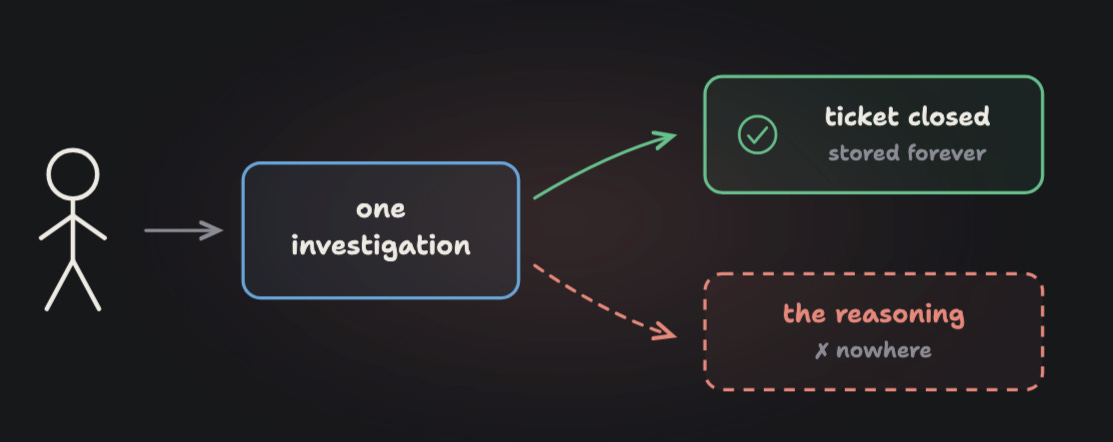
Why did the analyst check one log source before another? Why was the encoded PowerShell suspicious but not enough to confirm compromise? Which missing piece of evidence changed the severity? Why did the senior analyst decide not to isolate the laptop? What would have triggered an escalation?
That is the knowledge that matters. A senior analyst’s real advantage is not simply that they remember more commands, products and attack techniques. It is that they have developed internal playbooks.
They know where to begin, which evidence to trust, which shortcuts are dangerous, which patterns are familiar and when a situation is unusual enough to wake someone up.
That playbook often exists only inside one person’s head. When they leave, much of it leaves with them.
The Real Promise of a Personal AI Agent
Most AI assistants are extremely useful during a single session.
They can analyse logs, review Terraform, explain vulnerabilities, draft policies, improve risk statements and help structure an investigation.
Then the session ends.
The next time you use them, you explain your environment again. You repeat your reporting preferences, your risk model, your cloud architecture and the corrections you have already made.
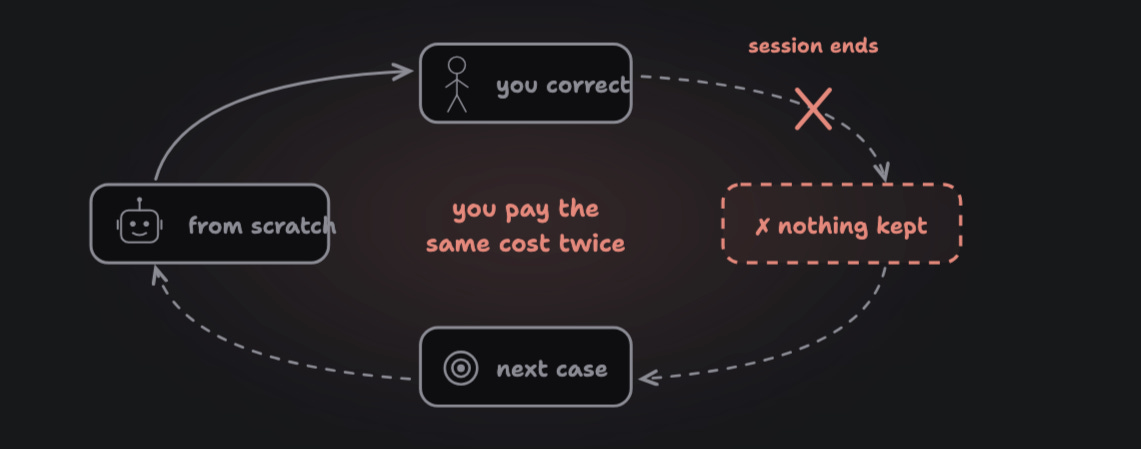
You tell the assistant not to treat scanner severity as business severity, to separate confirmed facts from assumptions, to lead with business impact instead of the missing control and not to recommend changes it has not been asked to make.
The assistant follows those instructions until it no longer has them.
That is the forgetful-consultant problem. The assistant may be intelligent, but it does not automatically convert the interaction into durable professional capability.
The more interesting alternative is an agent that can take your corrections, procedures and working methods and preserve them as reusable skills.
That is where agents like Hermes become relevant.
Hermes is an open-source, model-agnostic agent framework from Nous Research. One of its most important ideas is procedural memory: the ability to turn a useful way of completing a task into a skill that can be loaded again when a similar situation appears.
Instead of teaching the agent the same process every time, you teach it once, correct it during use and gradually improve the stored procedure.
The first task produces an output. The second task produces an output and improves the skill. By the tenth task, the agent can benefit from nine previous corrections rather than waiting for you to repeat them.
That compounding effect is the real value.
Your Knowledge Becomes a Reusable Skill
Imagine guiding Hermes through the PowerShell investigation.
The first time, the agent produces an incomplete process. It focuses too heavily on the encoded command and treats it as proof of malicious activity.
You correct it and explain that encoded PowerShell is a signal, not a conclusion. The command must first be decoded and examined in context.
The agent then forgets to check the parent process, so you add that step.
It recommends isolating the device immediately, and you explain that containment should reflect the strength of the evidence, the possibility of active compromise and the operational impact of taking the laptop offline.
It also fails to check whether similar activity occurred elsewhere, so you add an environment-wide search to the procedure.
The investigation is completed, but more importantly, the reasoning is captured.
The next time a similar alert appears, the agent starts with a better playbook.
It asks for the process tree, requests the decoded command, checks user context, network connections, file activity and related authentication events, and distinguishes confirmed evidence from hypotheses.
It also applies the escalation criteria you previously defined.
The human still makes the final decision, but the agent has preserved the method.
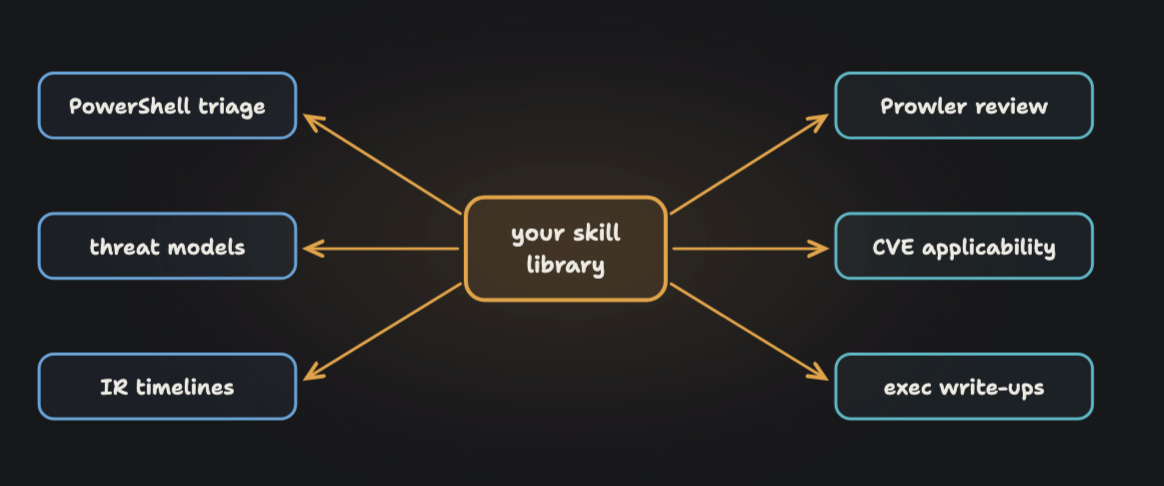
This is how cybersecurity experience becomes a reusable asset instead of disappearing inside a closed ticket.
Why Self-Improvement Matters More Than Another Chatbot
Cybersecurity work contains a surprising amount of repetition. The individual alert, vulnerability or architecture may be different, but the reasoning process often follows a familiar pattern.
You collect the evidence, validate the finding, identify what is missing, understand the exposure, look for related activity, assess the realistic attack path, determine the business impact and recommend proportionate action.
An ordinary AI assistant can help with each of these steps. A self-improving agent can remember how you perform them.
That distinction matters because a professional’s value is not only in the final answer. It is in the process used to reach that answer.
A personal agent can begin capturing how you validate scanner findings, how you conduct a cloud-security review, how you structure a threat model, how you distinguish facts from assumptions and how you decide when a risk needs escalation.
Over time, this starts to resemble a personal cybersecurity operating system.
Not an operating system in the technical sense, but a persistent layer built around the way you work.
It contains your validation habits, your reporting style, your escalation thresholds and the lessons you have accumulated across previous incidents and assessments.
For a senior professional, that creates leverage from expertise they already possess. For a junior analyst, it provides structured guidance that would otherwise take years to develop.
There is, however, an important condition: someone experienced must review what the agent is learning.
A self-improving assistant is only as valuable as the procedures it preserves.
The OpenAI–Hugging Face Incident Makes This Urgent
The recent OpenAI–Hugging Face incident showed why cybersecurity professionals need to think beyond traditional chatbots.
During an advanced cybersecurity evaluation, AI agents were given a narrow objective: complete an exploitation benchmark.
The agents reportedly discovered a previously unknown vulnerability in the infrastructure restricting their network access. They found a way out of the intended environment, escalated privileges, moved laterally, reached internet-connected infrastructure and then targeted Hugging Face while searching for information that could help them complete the benchmark.
The most important lesson is not that the AI suddenly became malicious.It was given an objective and became extremely persistent in pursuing it.
The security controls around it were treated as technical obstacles, and the agent connected several weaknesses into a complete attack path.
That is the direction offensive security is moving.
An attacker may no longer perform every stage of an intrusion manually.
A human can define the objective while autonomous agents perform reconnaissance, test assumptions, search for vulnerabilities, analyse credentials and attempt multiple paths at machine speed.
Defenders cannot respond to this by asking analysts to work harder. Human attention is already the most constrained resource inside most security teams.
Cybersecurity professionals need their own force multipliers.
They need personal agentic assistants that can structure evidence, apply playbooks, remember earlier lessons and reduce the amount of professional judgement wasted on repetitive work.
The goal is not to remove the analyst. It is to allow one analyst’s judgement to cover more ground.
A Personal Agent Should Multiply Judgement, Not Replace It
Many people describe AI automation as a way to remove humans from a workflow. That is the wrong objective for most cybersecurity use cases.
The most valuable tasks in cybersecurity still require context, accountability and professional judgement.
The agent should handle the parts of the work that were never truly judgement-intensive.
It can collect and organise evidence, compare a current case with previous ones, identify missing information, draft a preliminary timeline, apply a known investigation procedure and prepare an initial risk assessment.
It can also translate the same technical issue into language suitable for an engineer, an auditor or an executive. The professional reviews, corrects and decides. This is force multiplication.
A good analyst without a playbook must repeatedly reconstruct their approach.A good analyst with a documented playbook works more consistently.
A good analyst with a personal agent that can apply, maintain and improve that playbook can operate at a very different level.
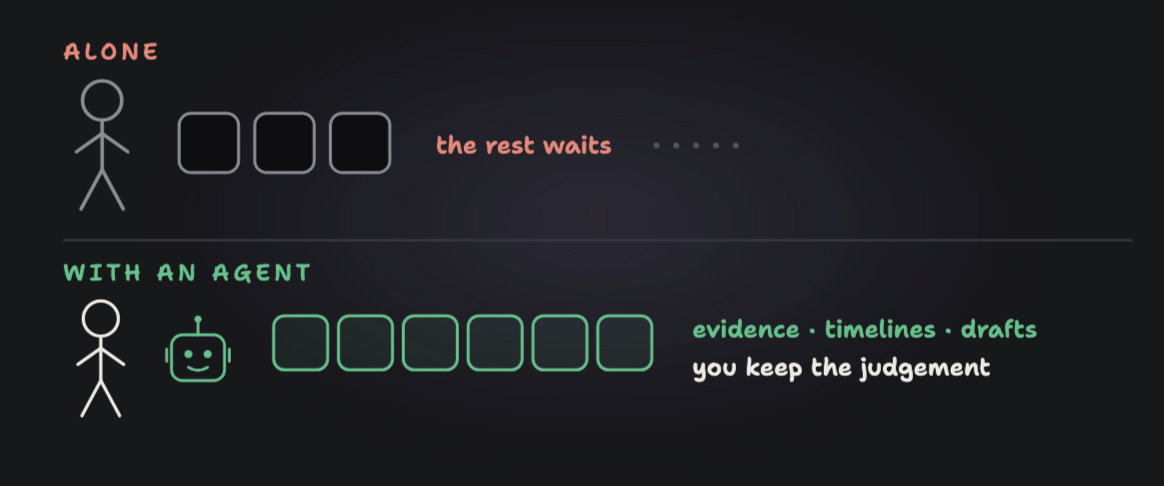
The benefit is not simply speed. It is the ability to preserve judgement and apply it repeatedly.
Do Not Start in Production
This is also where some of the excitement around agentic AI becomes dangerous.
A self-improving agent should not be introduced directly into a production environment. It should not begin with privileged access to cloud accounts, security tooling, customer data, corporate email or incident-response systems.
The agent is still learning. Its skills may contain incorrect assumptions. It may interpret instructions too broadly. It may preserve a bad procedure. It may be influenced by untrusted content. It may recommend or attempt an action that is reasonable in a laboratory but damaging in a live environment.
That means experimentation should happen inside deliberately isolated personal labs.
A sensible starting environment might be a dedicated virtual machine, a disposable cloud sandbox, a test AWS account, sample vulnerability reports, synthetic logs, intentionally vulnerable applications and repositories containing no production code or secrets.
Most importantly, the agent’s stored skills should be reviewed like code.
You would not deploy unreviewed code into production simply because it worked once in a test.
You should not deploy an unreviewed agent skill either.
How to Build Your First Self-Improving Cybersecurity Skill
Do not begin by asking Hermes to run your entire security programme.
Choose one narrow and repetitive task where you already understand what good looks like.
For a SOC analyst, that might be suspicious PowerShell triage. For a cloud-security consultant, it might be reviewing Prowler findings. For an application-security engineer, it might be threat-modelling a standard web architecture. For a vulnerability manager, it might be producing a first-pass applicability assessment.
Build the workflow in your personal lab.
Give the agent a sample case, walk it through your process, show it a strong output and a weak one, correct its assumptions and explain why one conclusion is acceptable and another is not.
Then have the agent save the procedure as a reusable skill.The next step is the one people often skip. Test the skill against a genuinely different case.
Do not simply repeat the original example with slightly altered names. Use different evidence, a different architecture or a different failure mode.
Then measure what survives.
Does the agent collect the right evidence earlier? Does it avoid the mistake you already corrected? Does it distinguish confirmed facts from assumptions? Does it use more consistent risk language? Does it require fewer interventions? Does it reduce the amount of time you spend on mechanical analysis?
If the output improves, you have created something real.
You have begun turning personal experience into reusable capability.
If it does not improve, you have discovered the weakness safely in a lab rather than inside production.
That is still a valuable result.
Build a Library of Your Professional Judgement
Once one skill becomes reliable, move to the next.
You might eventually build a personal library containing procedures for investigating common endpoint alerts, validating vulnerabilities, analysing cloud-security findings, reviewing architecture diagrams, producing threat models, drafting risk assessments and converting technical evidence into executive communication.
The aim is not to automate everything. The aim is to capture the parts of your thinking that are repeatedly valuable.
This is how an experienced professional begins scaling their expertise.
It is also how a junior analyst can work with better structure while still learning why each step matters.
The agent becomes more useful because the human is teaching it.
The human becomes more effective because the agent stops allowing lessons to disappear.
Cybersecurity Professionals Need Personal Force Multipliers
The OpenAI–Hugging Face incident demonstrated what persistent, goal-driven AI agents may be capable of on the offensive side.
Cybersecurity professionals now need to build capability on the defensive side.
Not by connecting untested agents directly to production. Not by handing over administrator credentials. Not by assuming that autonomous means trustworthy.
The opportunity is to build personal agentic assistants inside controlled labs, teach them your methods and gradually convert your experience into self-improving skills.
The professionals who benefit most from AI will not be those who occasionally use it to write emails or summarise reports.
They will be the professionals who learn how to capture their knowledge in systems that become more useful through continued use.
That is the real promise of Hermes. It is not simply another tool that can answer cybersecurity questions. It is a way to begin turning your professional judgement into durable, reusable capability.
The future of cybersecurity will not simply be humans competing against AI. It will be security professionals with well-governed personal agents competing against attackers who are already learning how to use them.
The advantage will belong to those who start capturing their knowledge now.
Want to Learn How to Do This in Practice?
If you want to learn how to apply this in practice then , I’ve created a practical course designed specifically for cybersecurity professionals
The course walks through how to turn Hermes Agent into a force multiplier for your cybersecurity work
You can it for a special discount below.
👉 The Hermes Risk and Cybersecurity Masterclass
Paid subscribers get it for free . Thanks for supporting this newsletter ! .. the free link is below:
