
The Truth About the 2026 Cybersecurity Job Market — You’re Not Ready
How to get ready for the Cybersecurity Job Market In 2026


Sorry for the very “clickbaity” title of this post but it is the truth.
I honestly believe most people aren’t ready for the Cybersecurity job market in 2026. Not because they’re not smart or they lack motivation.
But because the rules of the game are changing faster than ever — and the cybersecurity world they were trained for no longer exists.
2026 will be the first year where AI-native cybersecurity teams become the norm, not the exception. It will be the year companies stop treating AI as an experiment and start treating it as a workforce multiplier.
And it will be the year the gap between “people who learned cybersecurity” and “people who can do cybersecurity in an AI-driven environment” becomes brutally obvious.
As per a recent report by Anthropic in which they talked about the first AI-orchestrated cyber espionage campaign .. they remarked how “an inflection point had been reached in cybersecurity: a point at which AI models had become genuinely useful for cybersecurity operations, both for good and for ill”
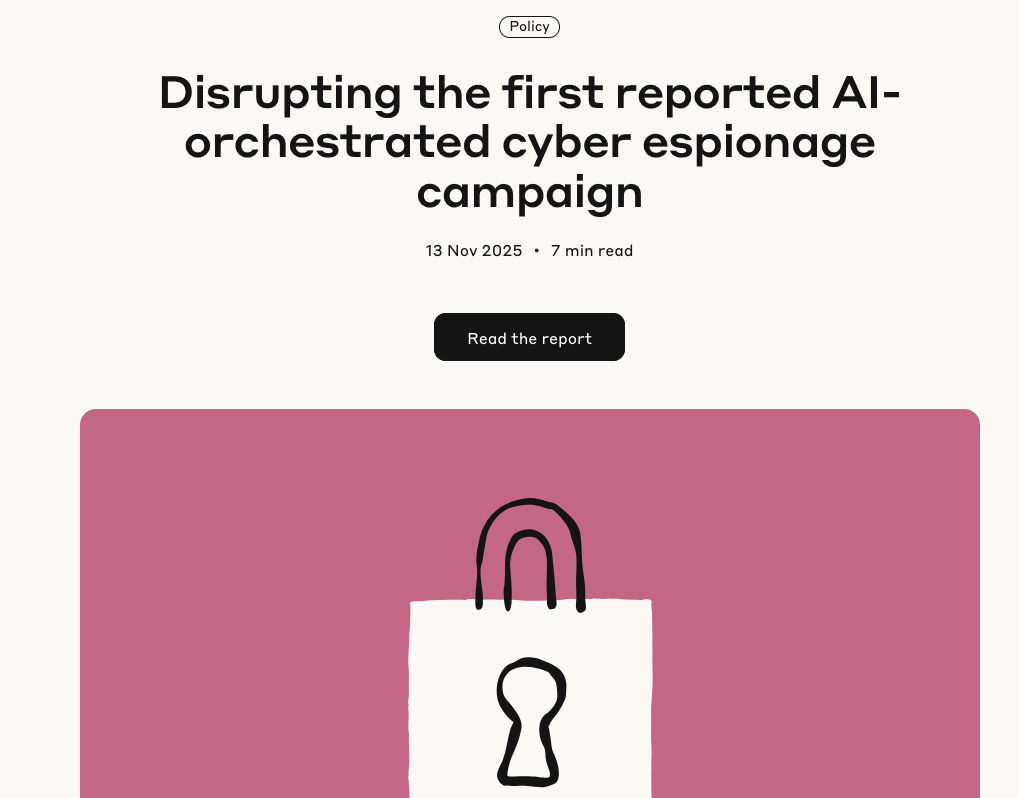
https://www.anthropic.com/news/disrupting-AI-espionage
Let’s talk honestly about what’s coming — and how to survive it.
1. The Market Isn’t Shrinking — But the Roles Are Changing
The biggest misconception people have is that cybersecurity jobs are “going away.”
They’re not.
Security is expanding faster than ever .. but the positions companies are hiring for in 2026 are not the ones most people are training for.
Here’s what’s happening:
Traditional SOC roles are being automated.
Agentic AI systems, autonomous triage, and LLM-powered correlation engines will handle 70–80% of the repetitive tasks analysts used to do.
Log review, alert triage, playbook execution — these are now handled by machines.
Cloud, AI, and identity are becoming the “core skill stack.”
Companies no longer care if you can configure a firewall.
They want to know whether you understand IAM, cloud native security, zero trust enforcement, and how AI systems fail.
GRC is shifting from checklists to engineering.
In 2026, frameworks are not enough.
Companies want people who can automate evidence, codify controls, integrate policy-as-code, and work alongside engineering teams.
If you’re studying security the same way people did in 2018 — certifications, endless labs, memorizing tools — you will be outpaced by people who learned the new rules of the game.
2. Agentic AI Has Completely Changed the Skill Curve
The single biggest disruption is this:
Agentic AI is not a new tool — it’s a new workforce.
It’s the equivalent of giving every security team a tireless junior analyst, a threat intel researcher, a detection engineer, and an auditor… all rolled into one.
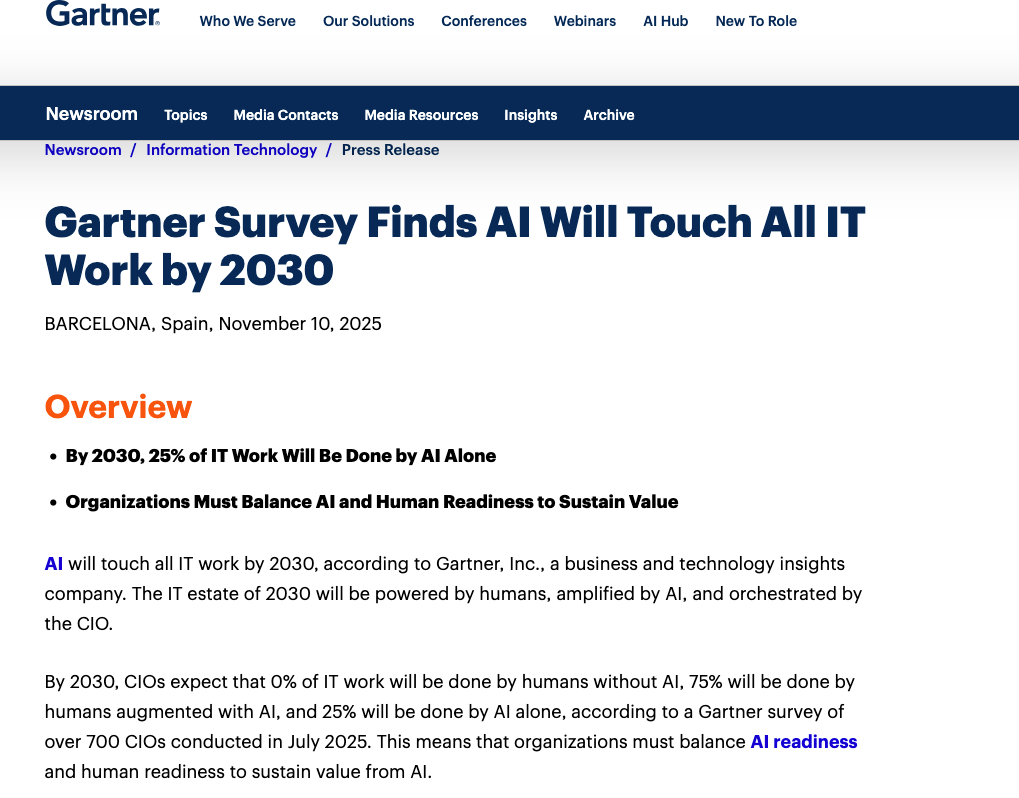
That means companies can:
Shorten hiring pipelines
Reduce entry-level positions
Upskill internal staff faster
Move from “manual security” to “autonomous security operations”
If you think this sounds bad for careers, you’re missing the point.
The cybersecurity job market isn’t collapsing.
It’s evolving.
The real winners will be people who shift from:
Being tool users to system thinkers
Being playbook executors to playbook designers
Being Alert triagers to AI supervisors and validators
Checkbox GRC pros to GRC engineers building automation
3. The Hiring Process Will Get Even Tougher
Here’s the uncomfortable truth:
2026 will have more cybersecurity roles — but breaking in will be harder.
Why is that ?
Companies now want multi-disciplinary skills.
You can’t just know security anymore. You need to understand:
Cloud
AI risks
Identity
Engineering fundamentals
Threat modeling
Automation
Zero trust principles
The days of “learn Security+ and get a job” are over.
Entry-level roles will shrink further.
AI has already taken over the grunt work. So companies need fewer people at the bottom — and more at the middle.
4. The Jobs That Will Be in High Demand in 2026
Here’s the good news:
While traditional roles shrink, entirely new job categories are exploding.
These are the roles with the strongest future:
AI Security Engineer
Not theoretical AI safety — actual engineering of secure AI pipelines, memory systems, agents, and model governance.
Agentic AI Risk Analyst
People who understand goal misalignment, cascading hallucinations, multi-agent failure, and MAESTRO threat modeling.
Cloud Security Architect (AI-aware)
Cloud is still king — but architects who can build secure AI infrastructure will be the highest paid.
Identity Governance Engineer
Identity is the new firewall — and AI will only make it more central.
GRC Engineer / Continuous Assurance Engineer
People who can turn controls into code. This field will explode.
AI Red Teaming Specialists
A massive growth area. AI failures are the new breaches These are the roles that won’t just survive the next decade — they will define it.
5. The Skills You Must Learn Now (Or You’ll Be Left Behind)
If you want to be employable in 2026, focus relentlessly on four areas:
Cloud + Identity
Every security job is now a cloud job.
Agentic AI Security
You don’t need to be an MLOps engineer. But you must understand the risks.
GRC Automation
Not for coding’s sake — but because GRC automation is the new compliance.
Cybersecurity Strategy & Architecture
Because AI will handle the details. Humans will handle the decisions.
The Real Reason Most People Won’t Make It
It’s not because the field is too hard. It’s because they’re learning too slowly.
In 2026, the people who treat cybersecurity like:
a list of certifications
a set of tools
a checklist
a linear career path
…will get left behind.
The winners will be the ones who:
Learn faster using AI
Build real projects
Work on agentic AI security
Understand cloud fundamentals
Master identity
Develop systems thinking
Focus on outcomes, not tasks
This is the new cybersecurity professional .. A hybrid of engineer, strategist, and AI-native problem solver.
So… Are You Ready for 2026?
Most people aren’t.
But here’s the truth:
You don’t need to know everything. You don’t need to be perfect You don’t need to “catch up” with AI.
You just need to be 6 months ahead of everyone else.
That’s it.
Start learning the skills that will actually matter. Start building the portfolio employers actually want. Start thinking like the person who will be hired in 2026 — not the one trying to get hired in 2019.
Because the market is changing. The roles are changing. The expectations are changing.
And the opportunity has never been bigger for those who adapt.
2026 will separate the old cybersecurity world from the new one.
Which side you end up on is a decision you can make today.
“2026 will be the first year where AI-native cybersecurity teams become the norm…” yes! I agree. This is where I saw the trend going as well. I had to adjust course in my career and intentions.
Shall we connect