
The Cybersecurity Roles AI Will Amplify in 2026 .. Not Replace
The Careers Growing the Fastest are those not Competing With AI

A few weeks ago, a cybersecurity professional messaged me after watching one of my videos about AI. He’d been working in security for nearly 10 years. Good technical background, multiple certifications, experience in SOC environments, some cloud security exposure .. on paper, he was doing well.
But what stood out to me was how honest his message was.
He said,
“I feel like I’m doing everything right, but somehow I still feel replaceable.”
And honestly, I think a lot of cybersecurity professionals are quietly feeling this right now.
Not because they’re bad at what they do, and not because cybersecurity is disappearing. It’s because AI is changing what organizations actually value.
A few years ago, being able to manually process alerts, generate reports, review logs, map controls, or follow operational workflows at scale was incredibly valuable work.
But now AI can do large parts of that in seconds. And that creates a very uncomfortable question for a lot of people: what part of your role actually becomes more valuable when AI enters the picture?
Because here’s the thing most people are missing. AI doesn’t reduce the value of every cybersecurity career equally.
In fact, some roles are becoming dramatically more valuable because of AI. Roles like security architects, detection engineers, AI security engineers, cloud security architects, and AI governance professionals.
Why? Because AI increases leverage for the people closest to system design, judgment, trade-offs, and decision-making. The people who understand how systems behave, how risk spreads, and how to make good decisions under uncertainty.
And that’s what I want to talk about here
A lot of cybersecurity professionals are asking the wrong question.
“Will AI replace my job?”
The better question is:
“Which roles become more valuable when AI handles execution?”
Because the winners in the AI era won’t be the people competing with automation. They’ll be the people directing it.
The Big Shift Most People Are Missing
Here’s what I keep seeing in the conversation around AI and cybersecurity: people focus on tools.
AI-powered SOCs. AI-driven threat detection. AI this, AI that.
That misses the point.
AI compresses execution. It amplifies judgment.
Those are two very different things. AI is exceptionally good at processing information at scale .. correlating alerts, triaging logs, enriching indicators, summarizing events. Microsoft’s own research on the agentic SOC found that AI agents are now automating roughly 75% of phishing and malware investigations, and tasks that once required a full day of engineering effort can now be completed in under an hour by an agent.
But AI is still very weak at contextual responsibility. It can’t decide what level of risk is acceptable for your organization. It can’t weigh a business trade-off that involves regulatory exposure in one jurisdiction and revenue impact in another. It can’t absorb accountability when a system fails in an unexpected way.
Organizations still need humans to decide acceptable risk, business trade-offs, failure tolerance, and governance boundaries. Those decisions haven’t gotten easier with AI. They’ve gotten harder, because everything moves faster now.
That’s the shift. And the roles that sit closest to those decisions are the ones compounding in value.
1. Security Architects
This is probably the strongest example of AI amplification.
As systems become more autonomous, architecture matters more, not less. AI increases system complexity and speed. That makes bad architecture even more dangerous .. and good architecture even more valuable.
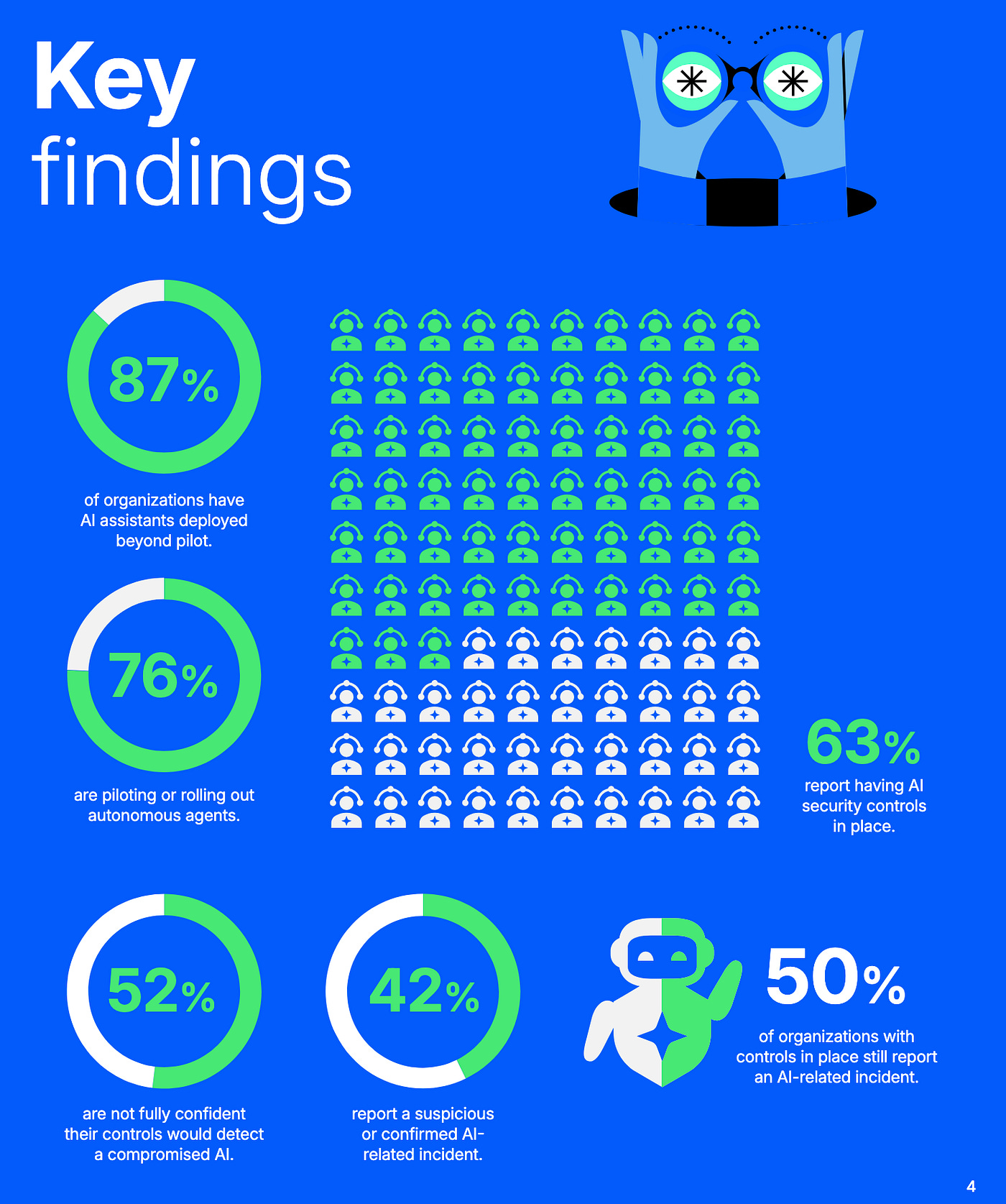
Consider what’s happening right now. Proofpoint’s 2026 AI and Human Risk Landscape report .. based on a survey of over 1,400 security professionals across 12 countries .. found that 87% of organizations have deployed AI assistants beyond pilot stage, and more than half describe their security posture as “catching up, inconsistent, or reactive.” Forty-two percent have already experienced a suspicious or confirmed AI-related security incident.
https://www.proofpoint.com/us/resources/threat-reports/ai-human-risk-landscape-report
The gap between AI adoption and AI security is accelerating, not closing. And that gap is fundamentally an architecture problem.
Security architects are the people who design blast radius containment, trust boundaries, identity-centric security models, and resilience engineering. They’re the ones thinking about how systems fail safely .. not just how they operate when everything works.
The real value of a security architect isn’t in producing artifacts. It’s in thinking critically, connecting dots across domains, and guiding teams toward secure outcomes. AI can generate a diagram. It can’t design a failure domain.
In the AI era, architecture becomes risk management at machine speed. The people who understand that are becoming indispensable.
2. Detection Engineers
This role matters because it reframes what the future SOC actually looks like.
The traditional Tier 1 SOC analyst .. the person reviewing alerts, enriching tickets, escalating to the next tier .. is the role under the most pressure. AI agents can now execute hundreds of queries across multiple data sources in minutes, work that previously required senior analysts and hours of manual effort.
According to recent industry data, 64% of 2026 job listings in security operations now require AI, ML, or automation skills.
But here’s the part people miss: automating triage doesn’t reduce the need for humans. It shifts where humans are needed.
Microsoft’s research on the agentic SOC describes the shift clearly: detection and response engineering is becoming more central as teams design policies, confidence thresholds, and escalation paths for AI-driven systems. Detection engineers are moving from writing rules to teaching systems what matters.
They’re deciding which signals are trustworthy, adding the right context, and setting the confidence levels that determine whether a detection can be acted on automatically .. or whether it needs human review.
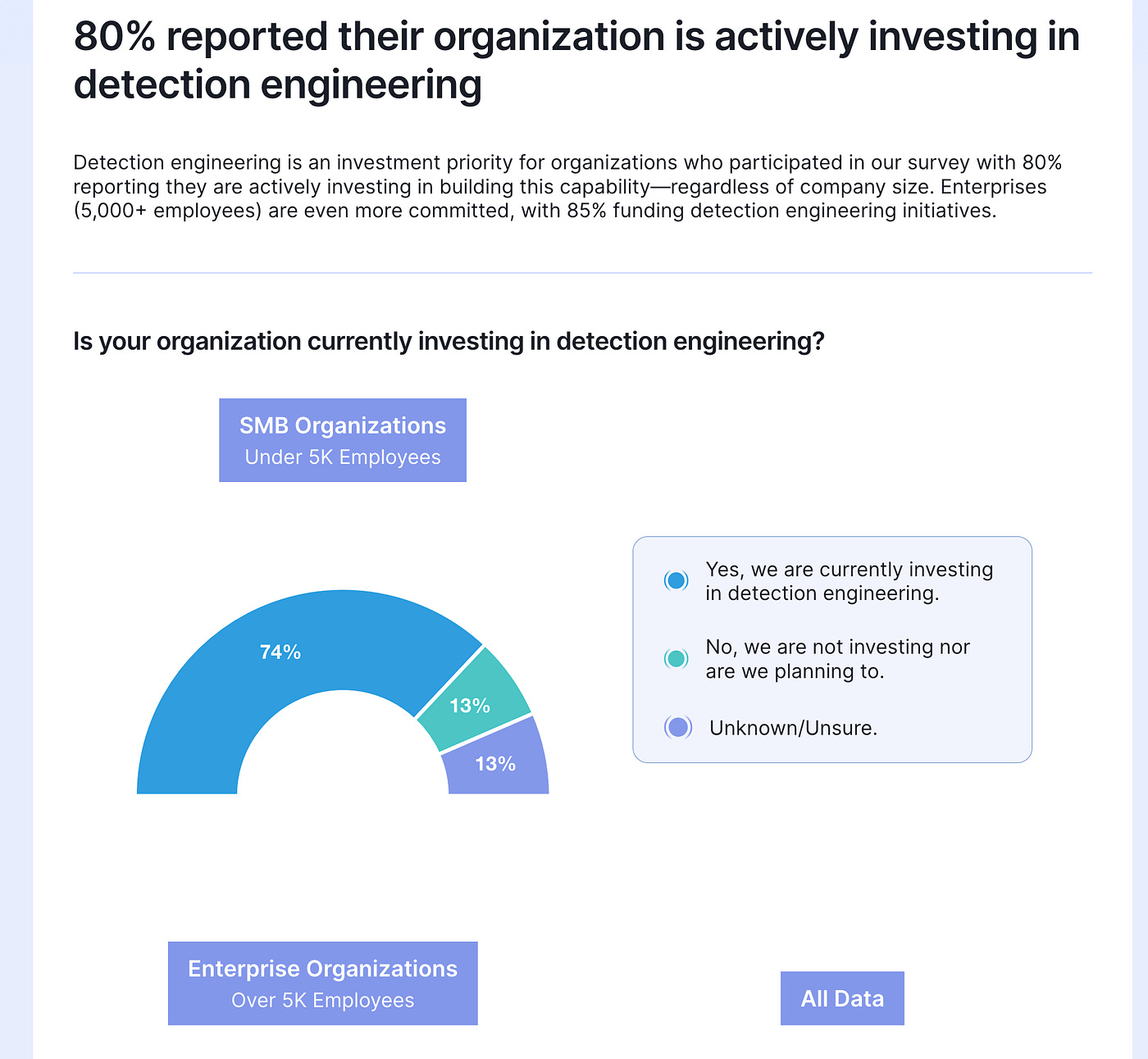
The SANS Institute and Anvilogic’s 2025 State of Detection Engineering Report found that nearly 80% of organizations are now actively investing in detection engineering as a security function. This isn’t a niche discipline anymore. It’s a core capability.
https://www.anvilogic.com/report/2025-state-of-detection-engineering
The future SOC analyst looks more like a systems engineer than a ticket processor. Analysts who only review alerts are vulnerable. Engineers who design detection systems, telemetry pipelines, and workflow orchestration become dramatically more valuable.
3. AI Security Engineers
This section has enormous future-looking energy, because the attack surface it addresses barely existed three years ago.
AI systems .. especially agentic AI systems that can reason, plan, use tools, and take actions autonomously, introduce an entirely new class of security risks. These go far beyond traditional application security.
Cisco’s State of AI Security Report shows that while most companies are happily jumping on the Agentic AI bandwagon .. only 29 percent feel they can do so securely
That gap .. between how fast AI is being deployed and how poorly it’s being secured .. is where AI Security Engineers step in.
These professionals focus on securing AI pipelines, addressing prompt injection and memory poisoning, designing model access controls and agent permissions, preventing tool misuse, and building human-in-the-loop oversight into autonomous workflows.
They’re dealing with problems like orchestration security, MCP risks, and ensuring that AI agents don’t escalate privileges or exfiltrate data through legitimate-looking tool calls.
AI systems introduce an entirely new attack surface and most organizations are only beginning to understand it.
4. GRC Engineers
This one fits the broader theme perfectly, and very few people are articulating it clearly.
Traditional checkbox-driven GRC is getting automated. That was always coming. But engineering-focused governance — the kind that actually operationalizes trust .. is compounding in value.
The SANS Institute has hosted dedicated sessions on policy-as-code and compliance-as-code. The CNCF’s Automated Governance Maturity Model, NIST’s OSCAL framework, and a growing ecosystem of open-source tools are all converging on the same idea: governance that runs in code, not in spreadsheets.
GRC professionals who can build evidence automation, implement policy-as-code, design continuous compliance monitoring, and manage API-driven assurance pipelines are becoming essential. The ones who can explain risk, trade-offs, and uncertainty to executives .. without hiding behind frameworks .. are becoming even more valuable.
The future of GRC is not documentation. It’s operationalized trust.
5. Cloud Security Architects
Cloud environments are becoming too dynamic for manual security management. That was true before AI. Now it’s exponentially more so.
Cloud and AI also have a symbiotic relationship .. the more companies invest in AI .. the more likely they are to do so on the cloud.
Organizations running AI workloads in cloud environments shift faster than any architecture team can manually track. Configuration drift, identity sprawl, multi-account complexity, and AI-enabled cloud attacks are compounding simultaneously. Proofpoint’s 2026 report found that exposure now extends across third-party SaaS and cloud applications (47%), social and messaging platforms (41%), and AI assistants or agents (36%) — not just email.
The people who understand multi-account strategy, failure domain design, identity architecture at scale, segmentation, and how to secure AI workloads in cloud-native environments are on the right side of the filter. They’re not operating services. They’re designing the systems that determine whether those services can fail safely.
Cloud security architects who can design scalable controls for these environments are solving problems that AI alone cannot.
6. AI Governan
ce Professionals
This is where you can differentiate yourself heavily right now. Most people still think governance means paperwork. That framing is already obsolete.
The EU AI Act .. the first comprehensive legal framework for AI anywhere in the world .. becomes fully applicable for high-risk systems in August 2026. It requires documented risk management systems, robust data governance, technical documentation, human oversight mechanisms, and continuous monitoring. Organizations that lack systematic inventories of their AI systems, that treat AI like traditional software, or that don’t maintain design history documentation are going to struggle with compliance.
But this isn’t just a European issue. The NIST AI Risk Management Framework, ISO 42001, and OWASP’s growing body of AI security standards are all creating demand for professionals who can navigate the intersection of AI risk, legal requirements, and operational reality.
AI governance professionals don’t just check regulatory boxes. They make risk decisions about acceptable AI behavior. They design human oversight frameworks. They align legal requirements with operational capabilities. They enable the business to use AI responsibly, which is a very different thing from slowing the business down.
Organizations don’t just need AI systems that work. They need AI systems they can trust. The people who can bridge that gap are going to be in extraordinary demand.
The Common Pattern Across All These Roles
If you step back and look at what connects these six areas, a clear pattern emerges.
These careers are amplified by AI because they reduce uncertainty, shape systems, absorb accountability, and make decisions under ambiguity. Not because they “use AI.” That’s a very important distinction.
The cybersecurity professionals who benefit most from AI aren’t the people typing the fastest prompts. They’re the people designing the environments those systems operate inside.
Every role on this list involves getting closer to decisions, not further from them. Closer to accountability, not further from it. Closer to system behavior under stress, not just system behavior on diagrams.
The Real Career Strategy for the AI Era
This isn’t about rushing to “learn AI” for the sake of it.
It’s about repositioning how you create value.
Move closer to architecture, engineering, governance, business decisions, system design, communication, and trade-offs. Move away from pure operational throughput, repetitive execution, process-only work, and dependency on escalation.
If you’re in a role right now where your success is measured by how many tickets you close, how many alerts you review, or how many compliance documents you complete .. that’s a signal. Not that your job disappears tomorrow, but that the floor under it is being compressed.
The careers that age well in the AI era lean into engineering, architecture, and judgment. They compound because the problems they solve get harder as systems get faster, not easier.
The Uncomfortable Truth .. and the Opportunity
AI won’t end cybersecurity careers.
But it will end the illusion that effort automatically equals value.
In the AI era, value comes from judgment under uncertainty, accountability when systems fail, and the ability to choose rather than simply comply. The professionals who thrive in the next decade won’t be the ones competing against AI on execution. They’ll be the ones designing the systems, workflows, guardrails, and decisions that AI operates within.
That’s where the leverage is moving.
And that’s where cybersecurity careers become significantly more valuable.. not less.