
The Cybersecurity Industry Is Being Rewired for 2026
What happens when AI becomes standard infrastructure, not innovation

If you had asked most people a few years ago what would reshape cybersecurity, the answers would have been familiar. New regulations. Bigger breaches. Another wave of cloud adoption.
2026 looks different.
Not because those things go away, but because AI quietly changes the shape of the work itself. And not in the hype-driven, demo-heavy way we’ve already grown tired of—but in ways that directly affect how security teams operate, how careers progress, and what skills actually matter.
Here’s how I see the industry shifting.
AI will absorb much of the beginner-level security work
For years, entry-level cybersecurity roles have been built around repetition. Running scans. Reviewing alerts. Blocking obvious indicators. Following playbooks that rarely change.
That model doesn’t survive 2026.
AI is already good at pattern recognition, correlation, and basic decision-making. By 2026, it will be very good at the things we used to give to juniors as “learning tasks.” Vulnerability scanning, basic alert triage, enrichment, even straightforward blocking actions will increasingly be automated or AI-assisted.
This doesn’t mean junior roles disappear overnight. But it does mean the traditional path of “start by doing repetitive work until you earn trust” breaks down. The learning curve shifts earlier. People entering the field will need to understand systems, workflows, and context much sooner—because the mechanical work is no longer where humans add the most value.
You’ll interact with agents more than security tools
Agentic AI is the biggest structural shift most people are underestimating.
In 2025, agents still feel experimental. Proofs of concept. Interesting demos. Side projects. In 2026, that changes. Agents move from “cool idea” to standard augmentation layer inside security teams.
Your daily workflow is far more likely to involve conversations with agents than hands-on time with individual security products. Instead of interacting with individual tools — DAST here, SAST there, SIEM dashboards somewhere else — you’ll increasingly interact with agents that orchestrate those tools on your behalf. You won’t ask, “What does the scanner say?” You’ll ask, “What’s going on here, and what should I do next?”
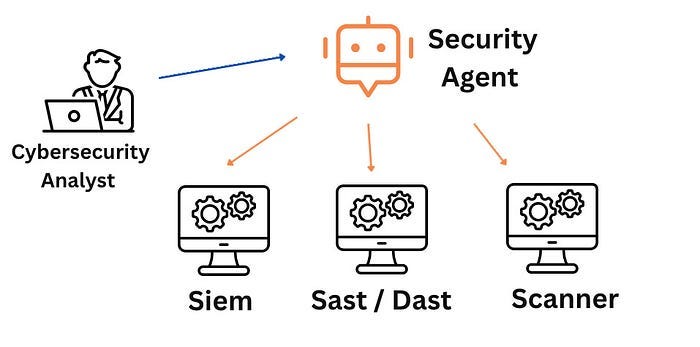
The skill that matters isn’t knowing where to click—it’s knowing what to ask, when to intervene, and how to recognise when the system is confidently wrong.
This is why simply “learning tools” stops being a long-term career strategy. Tools change. Interfaces change. Agents abstract them away. Understanding architecture, risk, and intent becomes the differentiator.
Vibe coding grows up
Vibe coding has had an odd reputation so far. Fast. Messy. Experimental. Sometimes impressive, sometimes reckless.
Far from going away .. in 2026, it matures
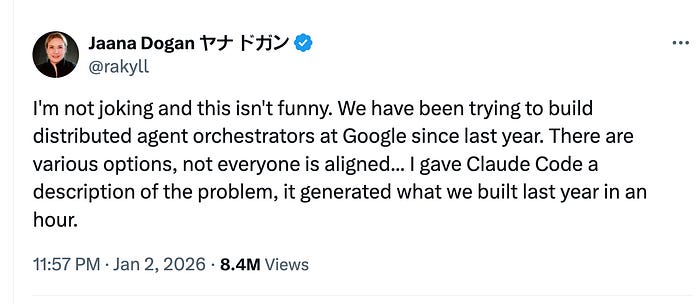
The underlying idea—using AI to translate intent into working code—doesn’t go away. What changes is discipline. Guardrails emerge. Patterns stabilise. Security-aware workflows develop. Teams stop treating vibe coding as a hack and start treating it as an engineering approach that requires governance.
For security professionals, this is critical. Code will be produced faster than ever, often by people who aren’t traditional developers. The risk isn’t bad intent—it’s unseen complexity. Mature vibe coding practices bring structure, review, and security considerations back into the loop without killing speed.
AI becomes what certifications used to be
Certifications aren’t useless, but their role is changing.
For a long time, certifications acted as force multipliers. They helped individuals scale their credibility and capability. In 2026, AI takes over much of that function.
The professionals who thrive aren’t the ones stacking badges. They’re the ones who know how to use AI to amplify their thinking, productivity, and impact. AI becomes the real multiplier—allowing one person to operate at a level that previously required a team.
This doesn’t mean fundamentals stop mattering. It means memorisation matters less than judgment. Understanding trade-offs matters more than knowing service names. AI fills gaps in recall; humans provide context and responsibility.
Responsible AI stops being a buzzword
Responsible AI has spent too long living in policy documents and slide decks. In 2026, that era ends.
Security teams are forced to operationalise it.
Fairness, accountability, transparency—these concepts stop being abstract principles and start becoming controls. Logging requirements. Review workflows. Human-in-the-loop checkpoints. Model behaviour monitoring. Clear ownership when systems fail.
Security professionals can’t outsource this to ethics committees or legal teams. They’re the ones designing and defending the systems. Responsible AI becomes part of threat modelling, architecture reviews, and incident response—not a compliance appendix.
This is where security expertise really matters. Translating values into enforceable technical controls is hard. But it’s also where the profession proves its relevance in an AI-driven world.
Personal branding becomes a real career advantage
As AI-generated content floods the internet, something interesting happens: people stop trusting generic voices.
In 2026, personal branding isn’t about vanity metrics or posting daily motivational quotes. It’s about signal. People want perspectives grounded in experience. Opinions shaped by real trade-offs. Clarity that cuts through noise.
Security professionals who can articulate how they think — how they reason through incidents, architectures, and failures — stand out. Not because they’re louder, but because they’re recognisable.
This matters for careers. Hiring managers increasingly look for proof of thinking, not just lists of tools or certifications. A visible track record of insight becomes a powerful differentiator in a crowded market.
The bigger picture
2026 isn’t about AI replacing cybersecurity professionals. It’s about AI reshaping what good security work looks like.
Less clicking. More thinking. Less tool obsession. More system understanding. Less generic noise. More authentic expertise.
The industry doesn’t collapse. It evolves. And the professionals who adapt aren’t the ones chasing every new trend—but the ones who understand what AI changes, what it doesn’t, and where human judgment still matters most.
That’s where the future of cybersecurity is headed.