
The Agentic AI Security Career Roadmap (2027 Edition)
The Highest-Paying New Cybersecurity Career Is Just Getting Started

Every few years, cybersecurity goes through a major transformation.
Twenty years ago, the biggest opportunity was network security. Then cloud computing changed everything, creating entirely new careers around cloud security, DevSecOps, identity management, and infrastructure as code.
Today, we’re witnessing another shift .. one that I believe will be even more significant.
Everyone is asking whether artificial intelligence will replace cybersecurity professionals. I think that’s the wrong question.
The real question is this:
What entirely new cybersecurity careers will AI agents create?
As organizations move from simply using AI chatbots to deploying autonomous AI agents that can write code, investigate alerts, modify cloud infrastructure, review configurations, and interact with enterprise systems, a new generation of security professionals will be needed to build, secure, test, and govern these agents.
If you’re early to these skills, you’ll have a significant advantage over professionals who continue preparing for yesterday’s cybersecurity jobs.
What Is Agentic AI Security?
Traditional AI is reactive. You ask a question. It gives you an answer. Agentic AI is different.
An AI agent can:
Read an entire codebase
Execute terminal commands
Query APIs
Investigate security alerts
Generate documentation
Create pull requests
Coordinate with other AI agents
Complete multi-step workflows with minimal human intervention
Instead of becoming another tool inside the security team’s toolbox, AI is becoming another member of the team.
That fundamentally changes what cybersecurity professionals need to know. The future isn’t about competing against AI.
It’s about learning how to supervise, orchestrate, secure, and govern teams of AI agents.
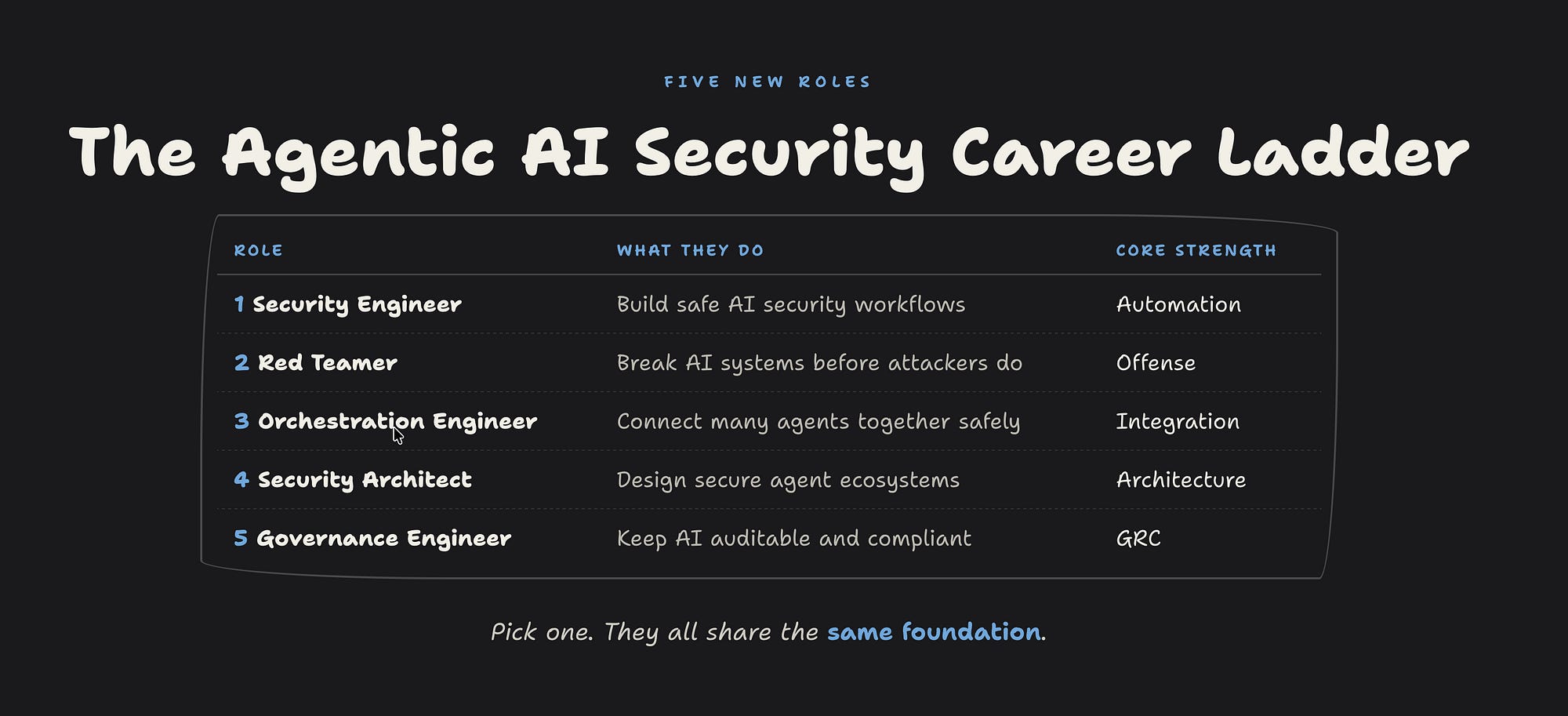
Career Path 1: Agentic AI Security Engineer
This is likely to become one of the most in-demand cybersecurity roles over the next few years.
Rather than manually performing repetitive security tasks, Agentic AI Security Engineers design workflows that allow AI agents to complete them safely.
Examples include:
Automated vulnerability investigations
AI-assisted cloud security reviews
Security documentation generation
Configuration analysis
Log investigations
Threat intelligence enrichment
Key skills include:
Python — The primary language for building AI-powered security automation and custom workflows.
Git — Essential for managing, reviewing, and safely deploying AI-generated code and configurations.
APIs — Enable AI agents to connect with security tools, cloud platforms, and enterprise applications.
Cloud Platforms (AWS, Azure, GCP) — Most AI security workflows operate in cloud environments and interact with cloud services.
AI Coding Assistants (e.g. Claude Code) — Dramatically increase productivity by generating, reviewing, and explaining security code and infrastructure.
AI Orchestration Frameworks — Coordinate multiple AI agents and tools to automate complex security workflows.
Prompt Engineering — Improves the accuracy, consistency, and reliability of AI-generated security outputs.
Security Automation — Allows repetitive security tasks to be completed faster, more consistently, and at scale.
The engineer’s value no longer comes from manually completing every task. It comes from designing reliable systems that allow AI agents to complete those tasks safely and consistently.
Career Path 2: Agentic AI Red Teamer
Every new technology introduces new attack surfaces.
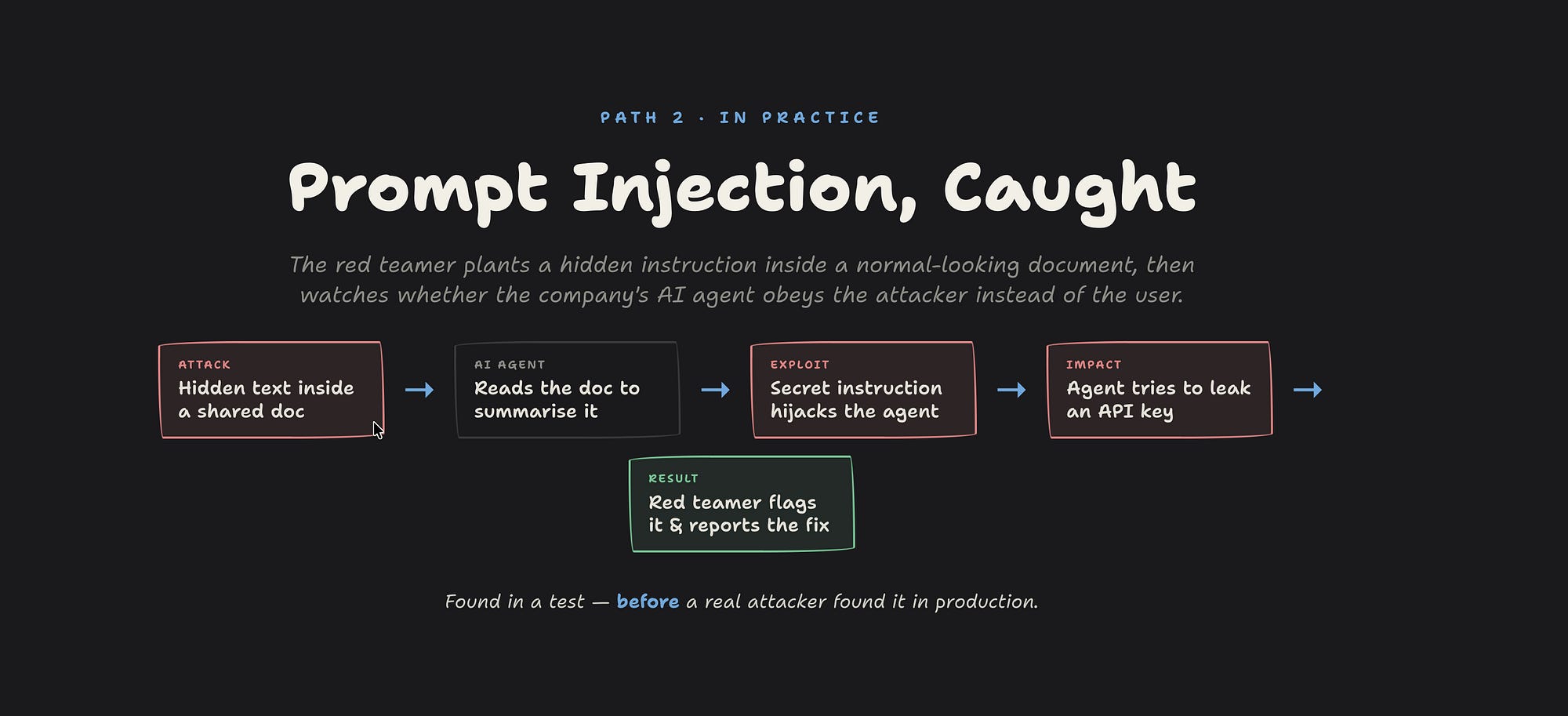
AI agents are no exception. Unlike traditional applications, AI agents can be manipulated through prompts, memory poisoning, malicious tools, compromised data sources, and indirect instructions hidden inside documents or websites.
Organizations will increasingly need specialists who understand how to attack AI systems before attackers do.
An Agentic AI Red Teamer focuses on evaluating how resilient AI systems are against real-world attacks.
Core skills include:
Prompt injection
Tool poisoning
Memory manipulation
Retrieval-Augmented Generation (RAG) attacks
AI jailbreak techniques
Agent permission abuse
Identity security
Threat modeling
Secure software development
As more organizations deploy AI agents with access to sensitive systems, these specialists will become increasingly valuable. A sample red teaming technique would be below:
Career Path 3: Agentic Security Orchestration Engineer
One of the least discussed .. but potentially most exciting.. career paths is AI orchestration.
Most organizations won’t deploy a single AI agent.
They’ll deploy dozens. Some agents will investigate alerts. Others will review code. Others will write documentation Others will interact with ticketing systems.
Someone has to design how all of these agents work together securely.
This is where the Agentic Security Orchestration Engineer comes in.
Key skills include:
API integrations
Event-driven automation
Workflow design
MCP (Model Context Protocol)
Cloud functions
Containers
Secrets management
Identity and access management
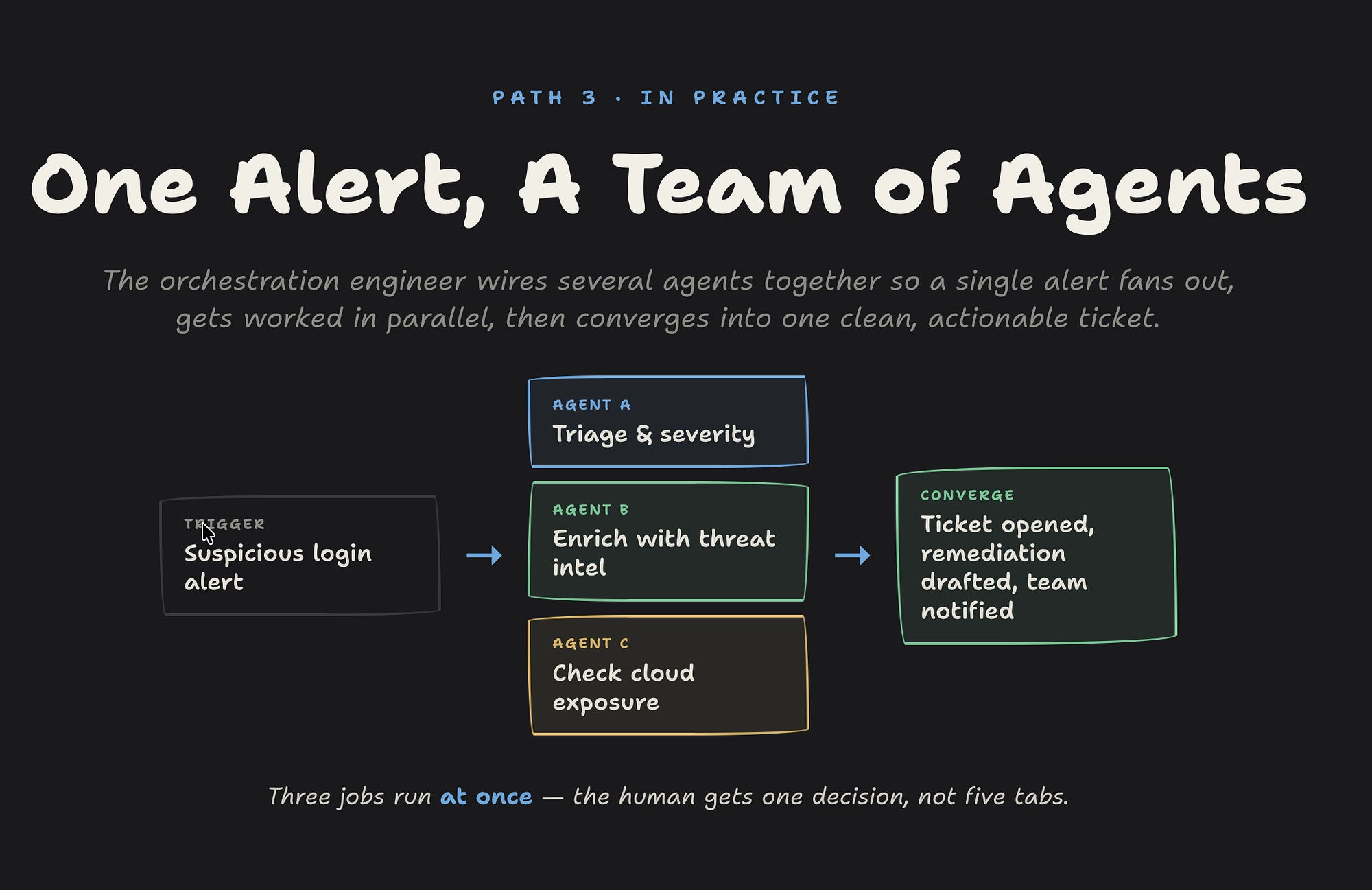
Imagine an AI workflow that receives a vulnerability alert, enriches it with threat intelligence, checks cloud exposure, creates a ticket, drafts remediation guidance, and notifies the engineering team .. all automatically. Building these workflows will become a highly valuable engineering discipline.
Career Path 4: Agentic AI Security Architect
As organizations adopt multiple AI agents, security architecture becomes even more important.
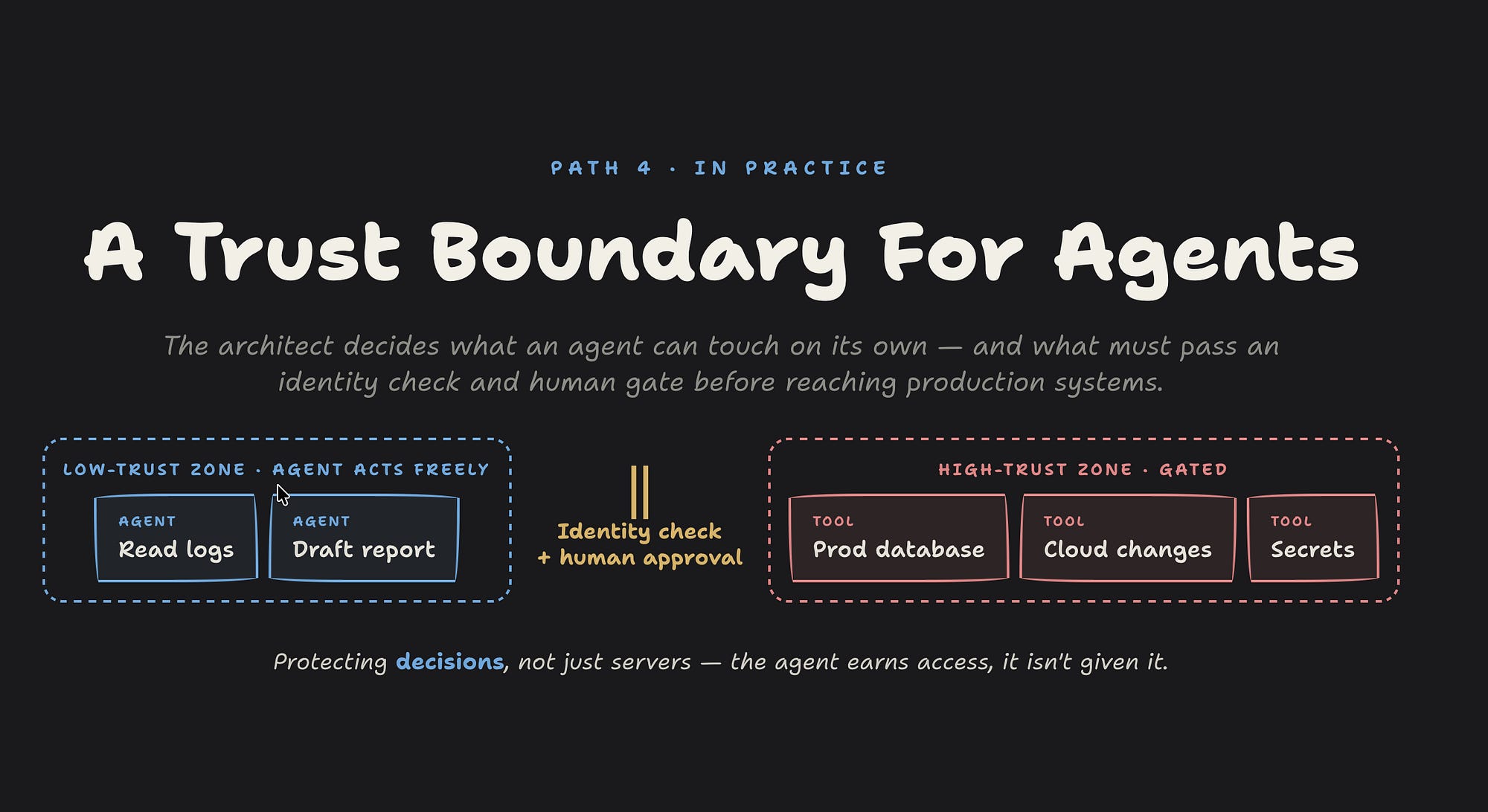
Architects won’t simply design cloud environments anymore. They’ll design secure ecosystems of autonomous agents.
This includes:
Defining trust boundaries
Identity architecture
Data access policies
Secure orchestration
Human approval gates
Multi-agent communication
The challenge shifts from protecting servers to protecting decision-making systems. Understanding Zero Trust, cloud security, identity, and threat modeling will become even more valuable in this role.
Career Path 5: AI Security Governance Engineer
Many people assume governance is the least technical area of cybersecurity.
I think that’s about to change. As organizations deploy AI agents, they’ll need professionals who understand how to manage risk, demonstrate compliance, and ensure AI systems remain auditable.
Future AI Security Governance Engineers may be responsible for:
Maintaining AI inventories
Conducting AI risk assessments
Mapping controls to frameworks
Reviewing AI vendors
Monitoring regulatory compliance
Automating evidence collection
Building AI governance dashboards
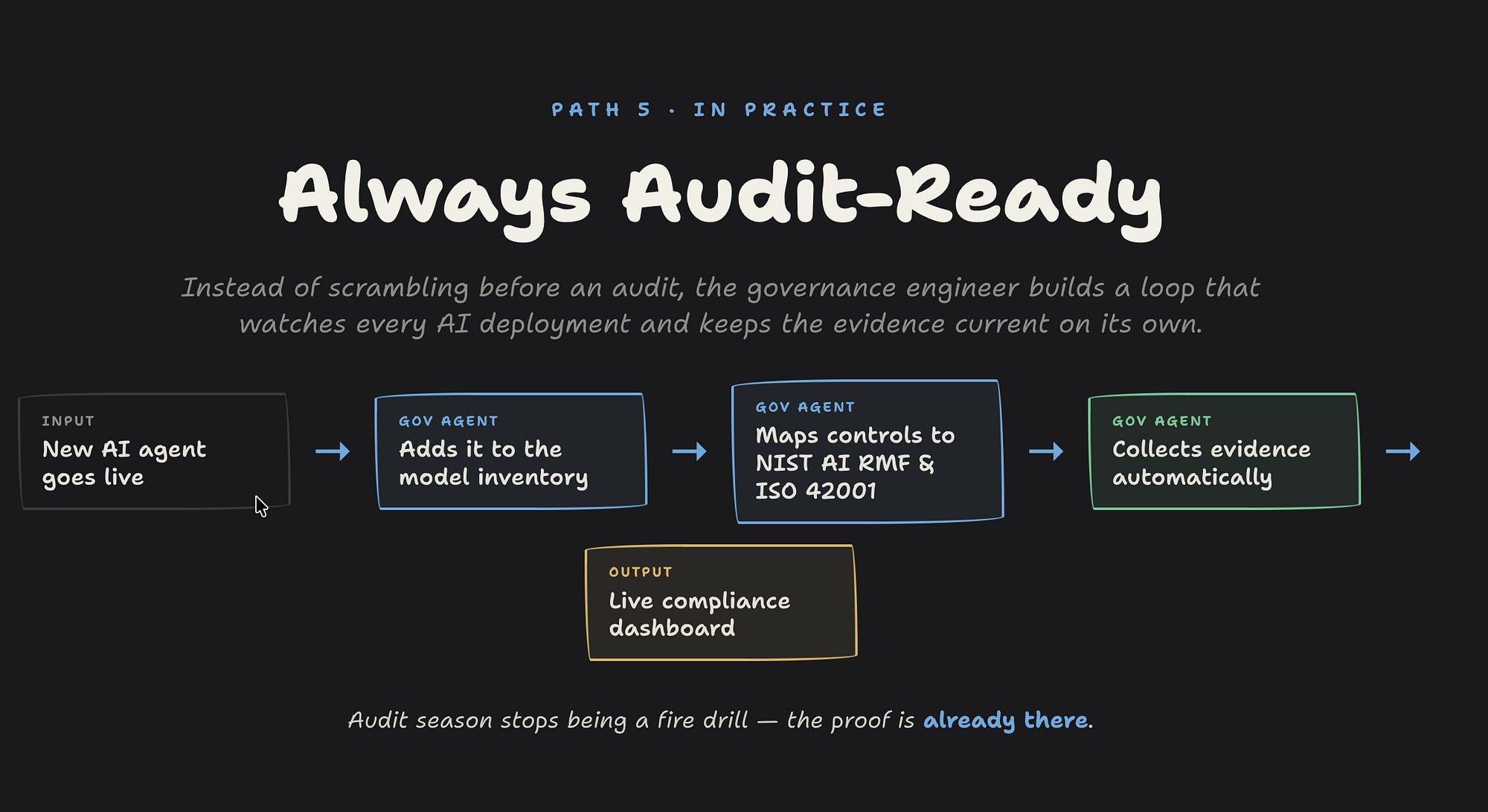
Rather than manually updating spreadsheets, they’ll increasingly rely on automation and AI-assisted compliance workflows.
The Skills Every Agentic AI Security Professional Needs
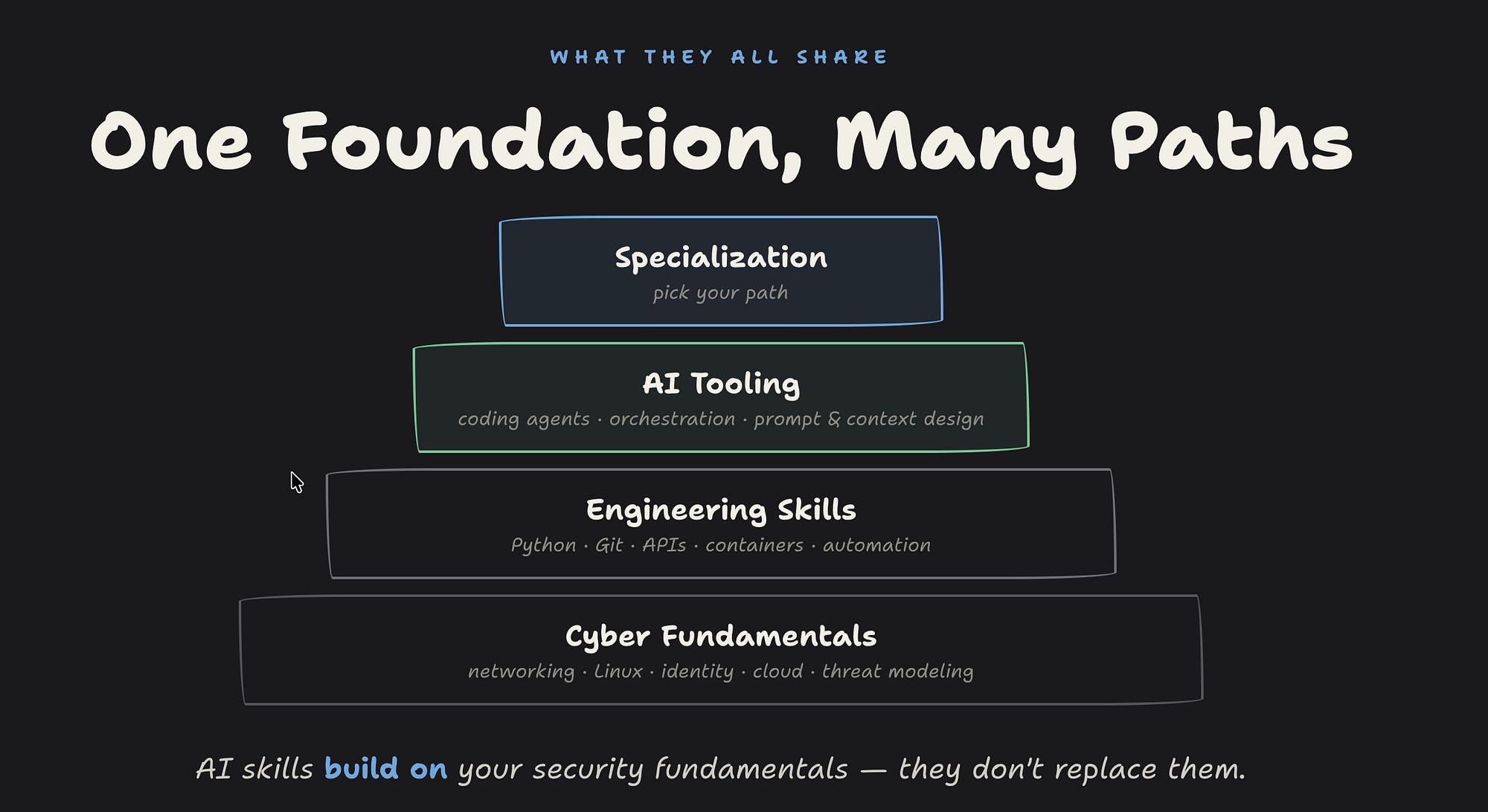
Although these career paths differ, they all share a common foundation.
1 — First, build strong cybersecurity fundamentals. Understand networking, Linux, identity, cloud security, threat modeling, and secure architecture.
2 — Next, develop engineering skills. Learn Python, Git, APIs, containers, and automation.
3 — Then master AI tooling. Become comfortable with AI coding assistants, orchestration platforms, prompt design, context management, and AI workflows.
Finally, choose your specialization.
Do you enjoy building systems? Become an Agentic AI Security Engineer.
Do you enjoy offensive security? Focus on AI Red Teaming.
Do you enjoy architecture? Learn secure multi-agent design.
Do you enjoy governance? Become an AI Security Governance Engineer.
How I’d Prepare Over the Next 90 Days
If I were starting today, my roadmap would be simple.
In the first month, I’d learn Python, Git, Docker, and an AI coding assistant such as Claude Code while building small automation projects.
In the second month, I’d study AI orchestration, APIs, cloud security, and Model Context Protocol, then connect AI agents to practical security workflows.
In the third month, I’d specialize. I’d build three to five portfolio projects, publish them on GitHub, write technical articles explaining the architecture, and record short demonstration videos showing the agents solving real security problems.
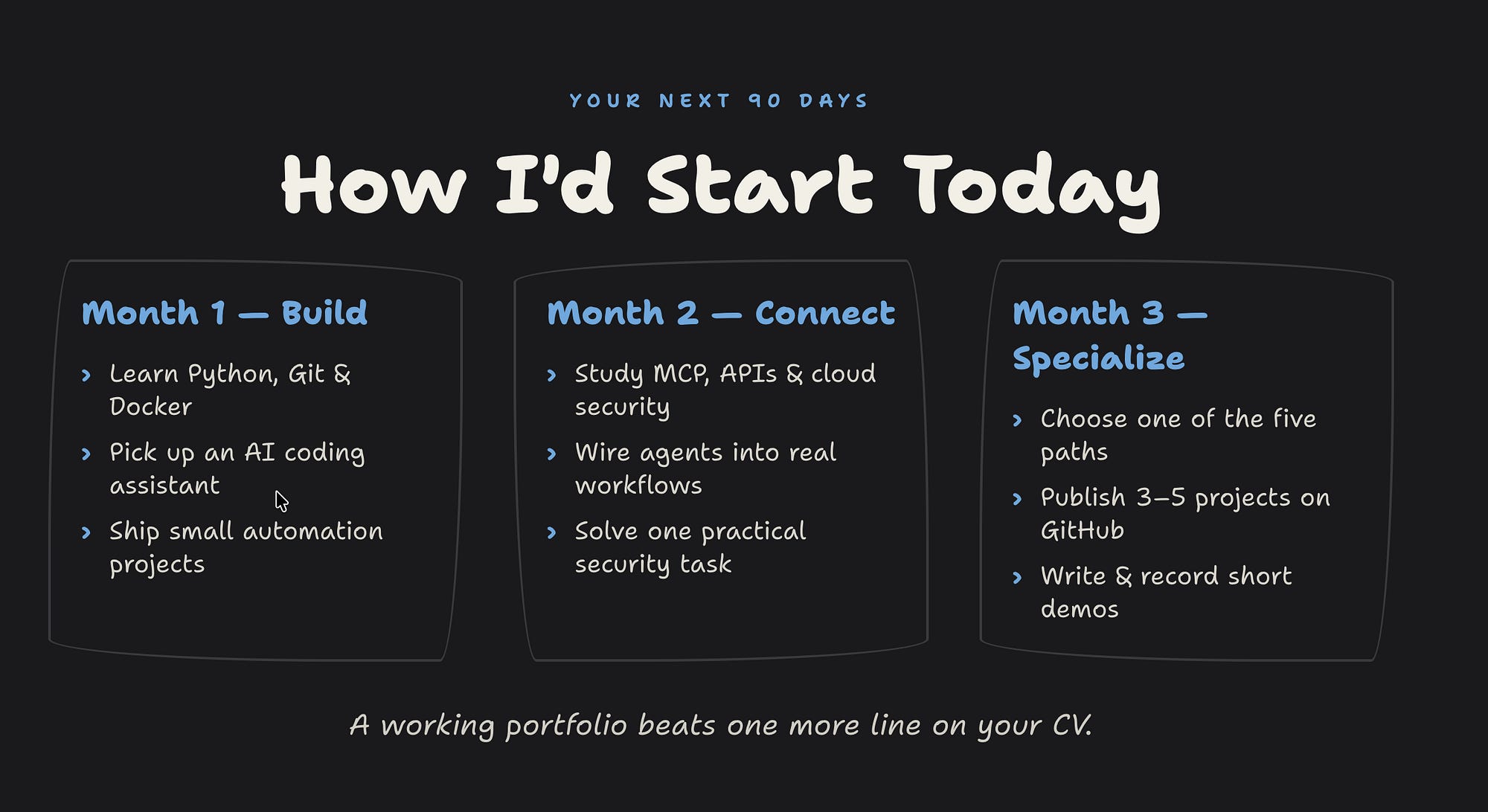
A portfolio that demonstrates practical AI security engineering is likely to become far more valuable than simply listing another certification on your CV.
Final Thoughts
Cloud security didn’t eliminate cybersecurity jobs. It created entirely new careers.
I believe Agentic AI will do exactly the same. The professionals who thrive won’t necessarily be those who know the most commands or memorize the most frameworks.
They’ll be the ones who understand how to design, secure, govern, and orchestrate autonomous AI systems. Five years from now, “Agentic AI Security Engineer” may be as common a job title as “Cloud Security Engineer” is today.
The best time to prepare for that future is before everyone else realizes it’s already arrived.
Good luck in your career !
Great post appreciate it 🎉