
Is It Too Late to Start Cybersecurity in 2027? (Honest Answer)
After 20 years in the industry, I’d ignore most of the advice that made me successful .. here is what I would do instead

A few weeks ago, I published a YouTube video about how cybersecurity careers are changing. Within days, my LinkedIn inbox was full of messages from students and junior engineers. Different backgrounds, different countries, different goals .. but the same anxiety ran through almost every message:
“With AI automating so much security work, am I already too late?”
One message stuck with me. A computer science student told me he’d spent two years preparing for a SOC analyst role .. the classic entry point into the industry .. only to watch a demo of an AI agent triaging alerts, correlating logs, and drafting incident summaries in minutes. Work he’d been training to do by hand. “What’s even left for me?” he asked.
That question stopped me cold.
Not because the fear is irrational it isn’t .. But because he was measuring himself against a roadmap designed for an industry that no longer exists. His plan would have been perfect in 2019. But 2027 is being shaped by forces that didn’t exist back then.
AI coding agents now review entire codebases, generate infrastructure, automate investigations, and complete work that used to occupy security engineers for days. Organizations are restructuring entire teams around automation. New specializations emerge almost monthly.
And yet aspiring professionals are still being told: get the degree, collect certifications, learn a few tools, wait for experience to arrive.
I’ve spent over twenty years in this industry .. cloud security, security architecture, governance, risk, and AWS consulting for everyone from startups to large enterprises. I watched the shift from on-prem to cloud, from cloud to DevSecOps, and now to agentic AI. Every shift created enormous opportunity — and quietly devalued skills people had spent years accumulating.
So here’s my honest answer to that student, and to everyone else who wrote to me. No, you’re not too late. But the way in has completely changed.
If I were graduating at 22 today, knowing everything I know now, I would deliberately ignore much of the advice that made me successful .. because the environment that advice was built for is gone.
This is exactly what I’d do instead.
1. Stop Chasing Job Titles .. Start Building Skills
The biggest mistake I see? People optimizing for a title. “I want to be a SOC Analyst.” “I want to be a Pentester.”
Those roles will still exist in 2027. But the work inside them is being rewritten in real time.
Consider two SOC analysts. The first spends her day manually triaging alerts .. exactly the work AI agents are now absorbing. The second uses AI to clear the routine alerts, then spends her time investigating the anomalies the AI flagged, tuning detections, and writing the automation playbooks the rest of the team runs. Same job title. Completely different career trajectories. When the team restructures around automation, only one of them is indispensable.
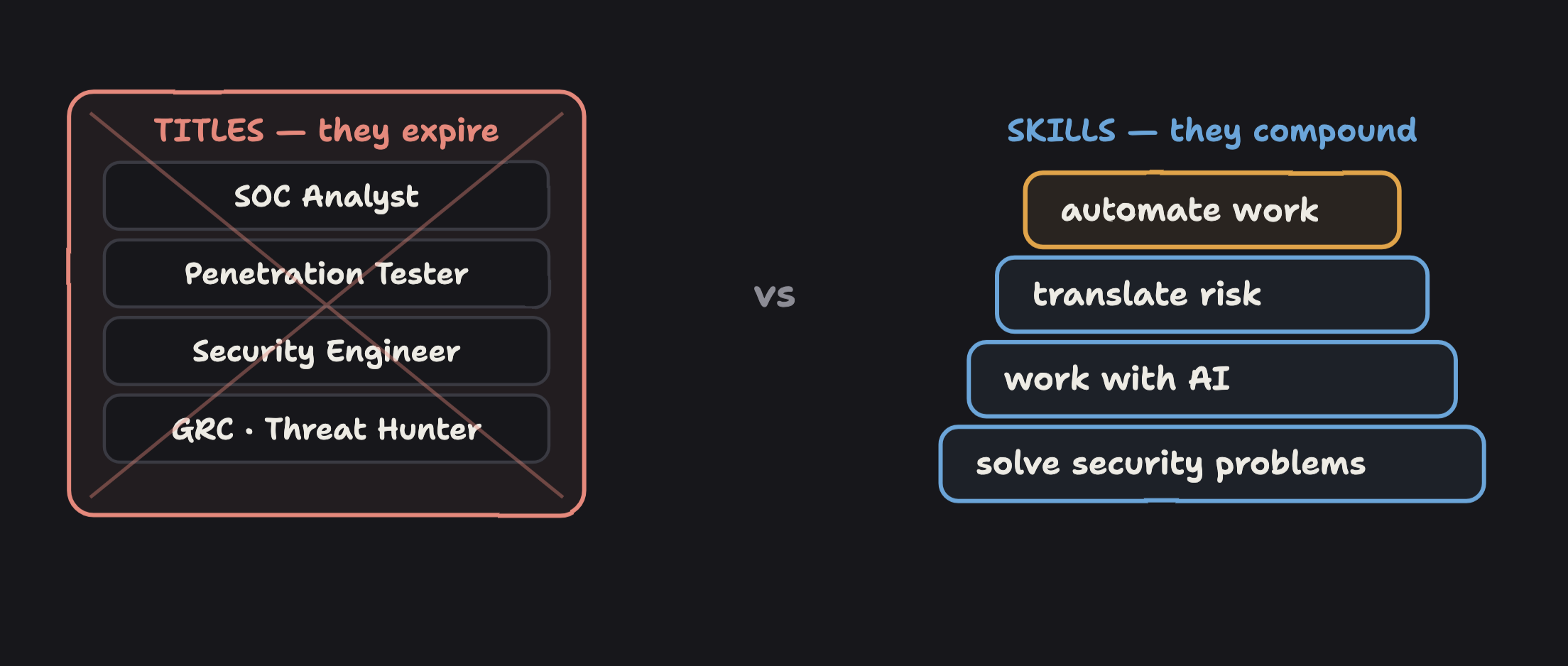
Instead of chasing titles, I’d obsess over four questions:
Can I solve security problems?
Can I work effectively with AI?
Can I translate technical risk into business language?
Can I automate repetitive work?
In twenty years, I’ve watched technologies come and go. The people who consistently solve problems always stay valuable. The people who define themselves by a single title struggle the moment the industry moves.
Titles expire. Skills compound.
2. Learn AI Before You Learn Your Tenth Security Tool
This might sound strange coming from a 20-year security veteran.
If I had 500 hours to study today, I wouldn’t spend them memorizing the features of ten security products. I’d invest a serious chunk of that time learning to work alongside AI:
Directing AI coding agents safely
Writing prompts that actually produce useful output
Reviewing and validating AI-generated code
Automating repetitive security tasks
Understanding the risks AI systems introduce
What does that look like in practice? Take a phishing investigation. The old way: manually pulling email headers, checking sender reputation, extracting URLs, searching logs for other recipients — an hour or more per incident.
The new way: an AI agent does all of that in two minutes and hands you a summary. Your job is the part that matters .. deciding whether the summary is right, spotting what the AI missed, and choosing the response. The analyst who can build and supervise that workflow is worth five who can’t.
Here’s the mental model that changed everything for me: treat AI like a very fast junior security engineer. It works tirelessly and produces enormous output .. but it needs supervision, judgement, and direction.
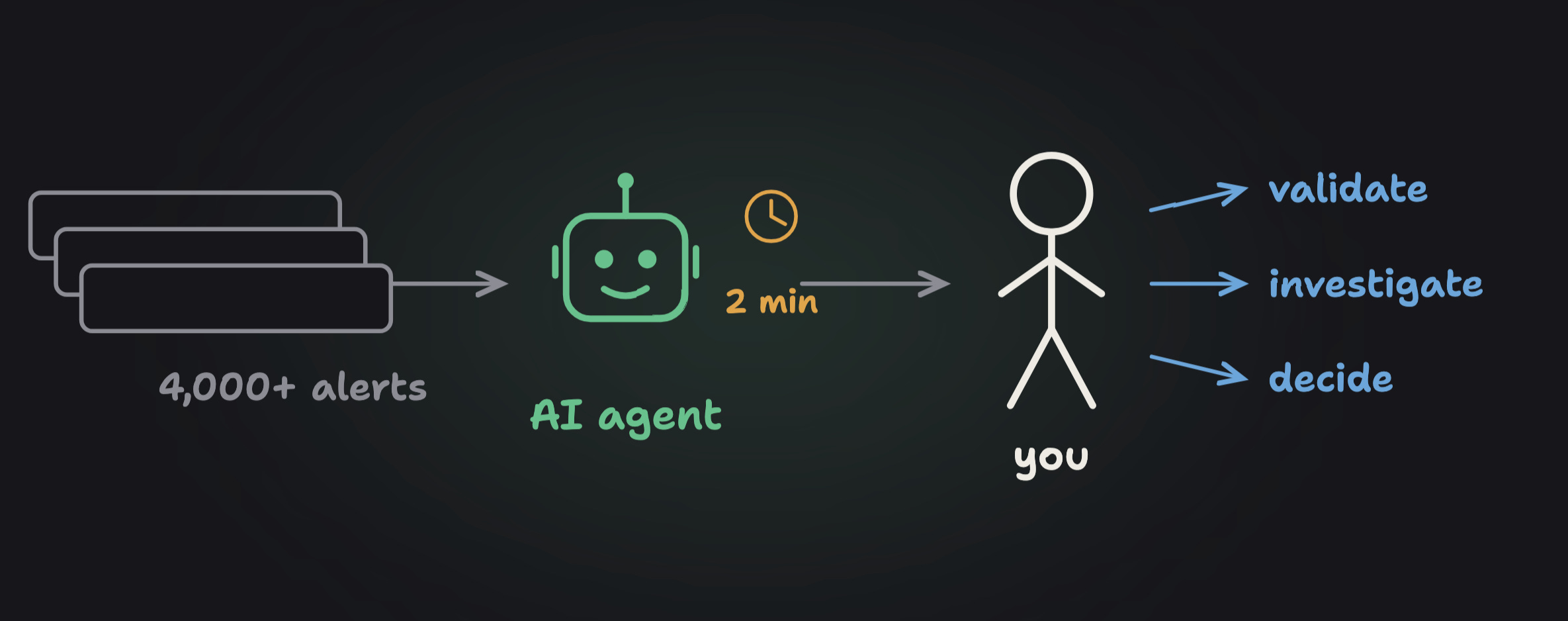
The professionals who know how to manage that “employee” are already outperforming the ones trying to compete against it. That gap will only widen.
3. Go Deep on Cloud Security .. One Platform, Not Three
Too many graduates still spend years on traditional on-prem technologies. Meanwhile, the overwhelming majority of modern systems are being designed cloud-first.
If I were starting over, I’d build practical cloud security skills from day one: identity and access management, cloud networking, Infrastructure as Code, containers, serverless, logging, monitoring, and cloud-native security services.
Here’s why depth beats breadth. Almost every major cloud breach you’ve read about .. leaked customer databases, exposed storage buckets, hijacked credentials .. came down to fundamentals: an over-permissioned IAM role, a misconfigured storage policy, a forgotten access key in a public repository. None of these require an exotic exploit. They require someone who deeply understands how identity, permissions, and networking actually behave on that platform. In my consulting work, I’ve reviewed environments where a single IAM role had administrator access to the entire AWS account .. attached to a web application anyone on the internet could reach. No security product on the market catches what a person who understands the platform catches.
Companies rarely struggle because they lack another security product. They struggle because they don’t understand how their own cloud environment actually works.
One platform understood deeply beats three platforms understood superficially. Every time.
4. Learn to Code .. the Rules Just Changed in Your Favor
Tools like Claude and Claude Code have been a genuine game changer for cybersecurity specifically. Security professionals were never going to become full-time developers .. we never had the time. But we’ve always had an endless backlog of small tools we wished existed. Now we can build them.
A real example: suppose you want a script that scans every IAM role in your AWS account and flags wildcard permissions. Two years ago, that meant a weekend of wrestling with SDK documentation. Today, you describe it to an AI coding agent, and you have a working version in twenty minutes. Your value isn’t typing the code — it’s knowing that wildcard permissions are dangerous in the first place, and reviewing what the AI produced before you trust it.
That review step is everything. AI-generated code can hardcode credentials, skip input validation, or handle errors in ways that create new vulnerabilities. Which is why the most valuable coding skill in 2027 is no longer writing code from scratch. It’s reading AI-generated code and spotting where it’s wrong. Security professionals are uniquely positioned to be good at exactly that.
You still need the foundations to steer well: Python, Git, Terraform, YAML, and JSON will pay dividends for decades. But the barrier between “I have a security idea” and “I have a working tool” has never been lower. Take advantage of it.
5. Build in Public. Your Portfolio Beats Your CV.
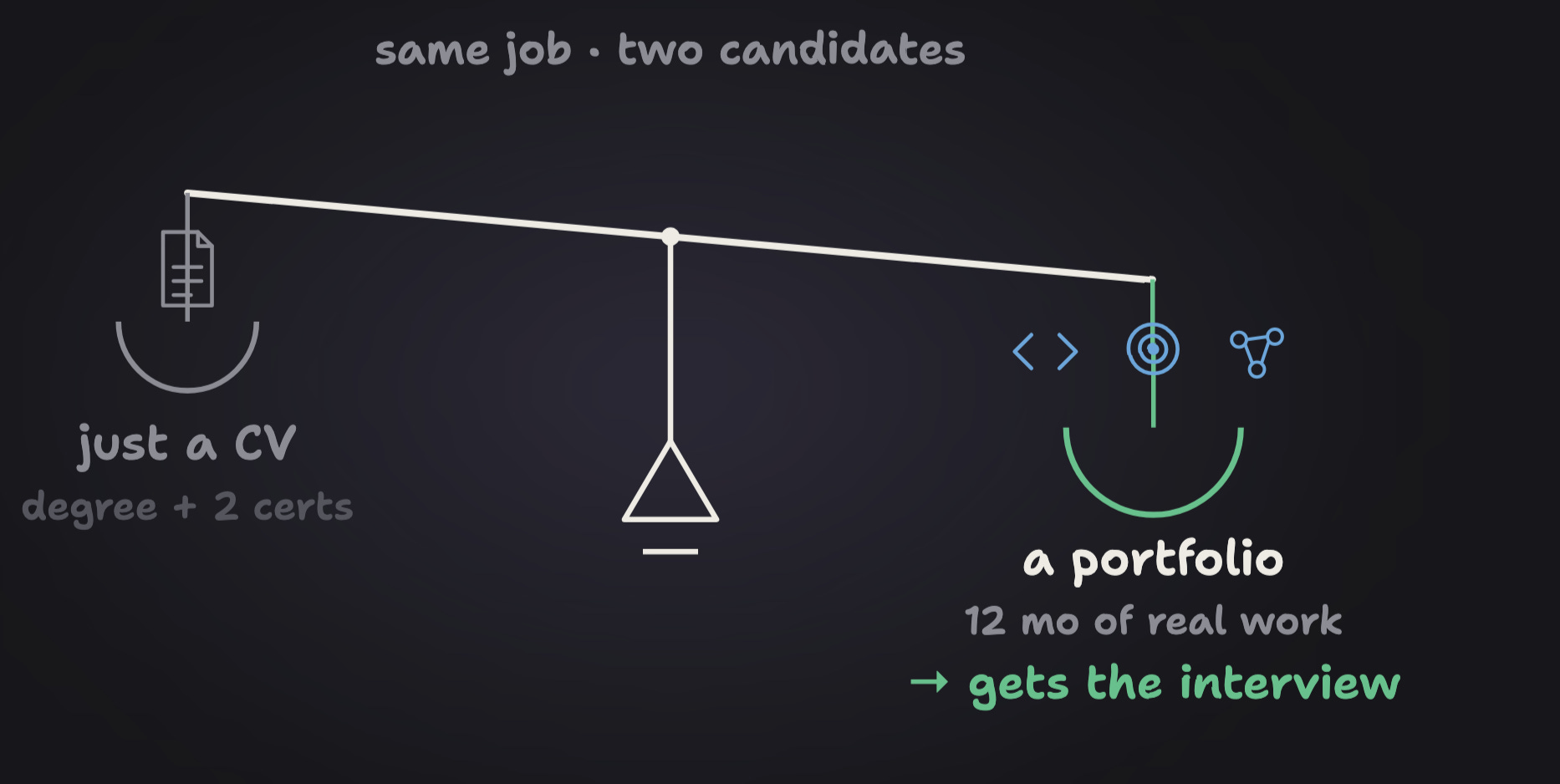
Degrees and certifications tell employers what you’ve studied. A portfolio proves what you can do.
If I were 22, I’d publish one thing every single week:
A GitHub repo with that IAM-scanning tool you vibe-coded — with a README explaining the security thinking behind it
A writeup of a home lab: “I deployed a deliberately vulnerable web app in AWS, attacked it, then detected my own attack in the logs”
A threat model for a real system everyone knows, like a food delivery app
A LinkedIn post breaking down a recent breach and what a small company should learn from it
Compare two candidates for a junior cloud security role. One has a degree and two certifications. The other has the same degree, one certification, and twelve months of public projects showing they can actually find misconfigurations, write detections, and explain risk clearly. I know which CV gets the interview .. because I’ve been the person doing the shortlisting.
Some of the best opportunities of my career didn’t come from my CV. They came because someone had already read my article, watched my video, or attended my talk before I ever applied.
Visibility creates opportunities long before you ask for them.
Don’t wait until you feel like an expert. Document the journey. The journey is the content.
6. Communication Is the Highest-Paid Skill in Security
The most overlooked career accelerator isn’t technical at all.
The highest-paid security professionals don’t just find problems. They explain them clearly. They influence executives. They write reports people actually read. They help decision-makers make better decisions.
A concrete example: a penetration test typically produces a 40-page technical report. Most of them are never read past page three. The tester who also writes a one-page summary .. here are the three findings that matter, here’s the realistic business impact, here’s what to fix first and roughly what it costs .. becomes the person executives ask for by name. Same technical work. Ten times the career impact.
After years of presenting security strategy to boards, I can say this with confidence: communication has contributed more to my career than any single certification.
7. Position Yourself at an Intersection
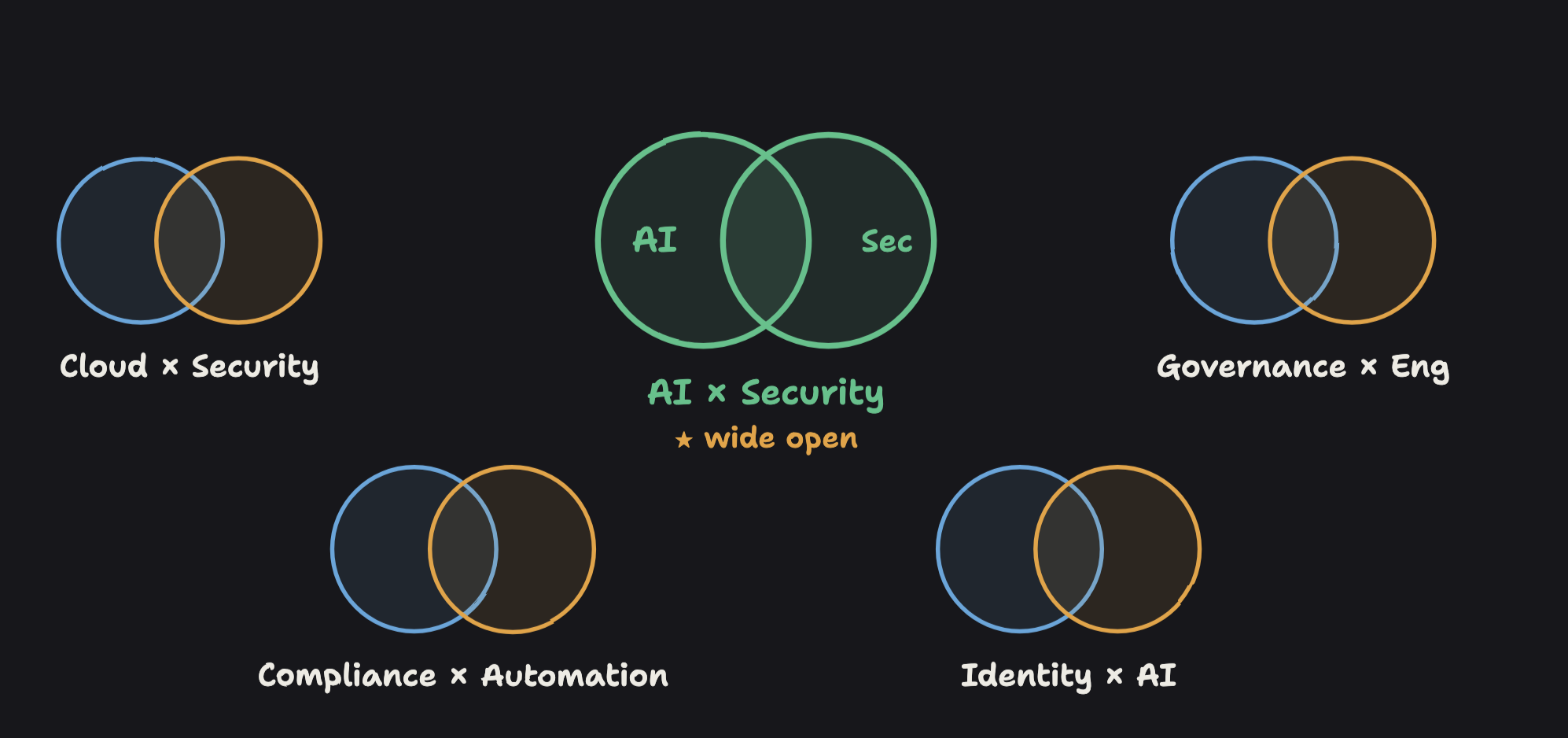
The biggest opportunities rarely live inside a single discipline. They live where disciplines collide:
Cloud × Security
AI × Security
Governance × Engineering
Architecture × Business
Compliance × Automation
Identity × AI
Every significant jump in my career happened because I moved into one of these intersections before it got crowded. Right now, the AI × Security intersection is wide open.
This is also exactly how I’d think about certifications.
Rather than collecting unrelated certifications because they’re popular, I’d use them to strengthen one intersection. If I wanted to specialize in Cloud Security, I’d combine a cloud certification with a security certification .. and then build hands-on projects around both, so the credentials and the portfolio reinforce each other. If I wanted to move into AI Security, I wouldn’t wait for the “perfect” certification to appear. I’d learn AI governance, experiment with AI coding agents, and understand how to secure agentic AI systems .. because in a brand-new field, practical experience is the credential.
Certifications are still valuable. They demonstrate commitment, provide structured learning, and help open doors .. particularly early in your career. But by themselves, they rarely create differentiation anymore, because thousands of candidates have access to exactly the same credentials.
The real differentiator is the combination: certifications plus practical projects plus AI skills, stacked at the intersection of multiple disciplines. That combination is almost impossible to commoditize.
8. Build Something of Your Own
Finally: I would never again rely entirely on an employer for career growth.
A newsletter breaking down one cloud security topic a week. A YouTube channel walking through home lab builds. An open-source tool that solves one annoying problem for security teams. A small course teaching developers to review AI-generated code for security flaws. It doesn’t matter which.
Not because it’ll replace your salary overnight — it probably won’t. But building teaches you things employment never will: marketing, writing, teaching, selling, personal branding.
I’ve experienced this firsthand. My YouTube channel started as a side project. It’s since generated tons of speaking invitations, and .. as this article proves .. a direct line to the next generation of the industry. None of that appears on a certification transcript.
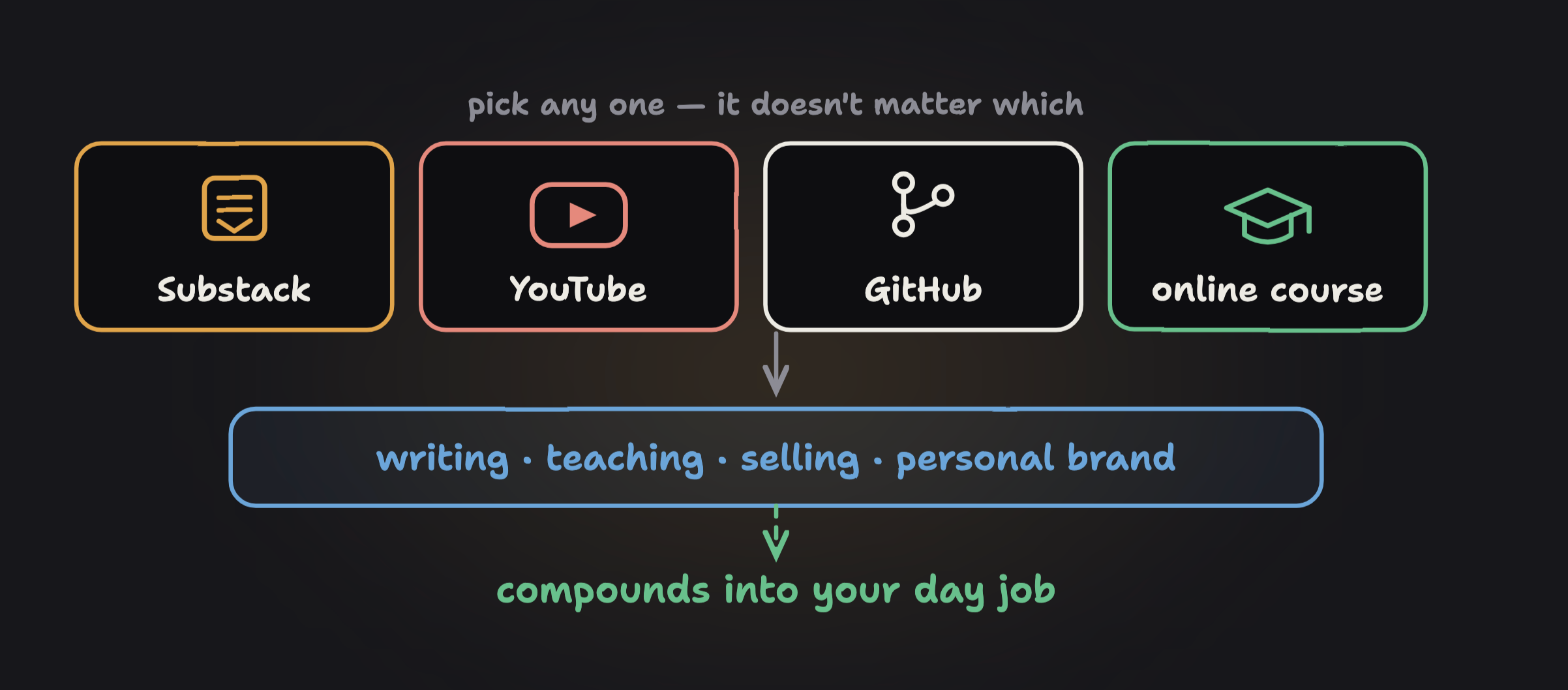
Those skills compound for decades. Even if your side project never becomes a business, it will make you dramatically more valuable in your day job.
The Mindset Shift That Matters More Than Any of This
If a 22-year-old entering cybersecurity remembers one thing from this article, make it this:
Stop preparing for your first job. Start preparing for your fifth.
The people who thrive over the next decade won’t be the smartest engineers or the most certified professionals. They’ll be the fastest learners. They’ll embrace AI instead of fearing it. They’ll automate the repetitive work and double down on judgement, creativity, and strategy.
Twenty years ago, learning Linux gave me an edge. A decade later, cloud security transformed my career. Today, I believe learning to direct, govern, and secure AI systems will be the defining career advantage of the next decade.
So to the student who asked me “what’s even left for me?” .. everything is left. Just not the version of the job you were preparing for.
If I were 22 again, that’s exactly where I’d place my bet.
Excellent framework, and the 'intersection' point is exactly right. Governance x Engineering and Compliance x Automation are already playing out in GRC hiring: the entry-level work of manually chasing evidence for an audit is precisely what agentic AI absorbs first. The GRC analysts who last will be the ones directing AI evidence-collection and translating residual risk for the board, not the ones filling out the spreadsheet fastest. Titles expire, but that judgment layer never will.