
How To Master CISSP Domain Concepts Using Real-World Incidents ( BOOK EXCERPT)
Use Real-World Incidents To Fortify Your CISSP Knowledge


The CISSP Certification is not an easy exam to pass
It’s eight domains cover pretty much everything in Cybersecurity from DDOS attacks to Application Security to Legal Standards
On of the big problems with prepping for the exam is that most CISSP practice exam guides are content-heavy but lack real-world context
The do know help you see how these concepts are applied when it truly matters — on the job.
One great tip I always recommend is to study real-world incidents and then map them to CISSP concepts.
By examining real-world breaches, incidents, and responses, you’ll see how organizations navigated challenges across each domain of the CISSP.
This approach helps you connect theory to real-world situations, giving you a deeper understanding of how these concepts operate in dynamic, high-pressure environments.
Let us take one example and then apply the concepts present in the first domain of the CISSP to it.
Case Study: Data Breach at Target (2013)
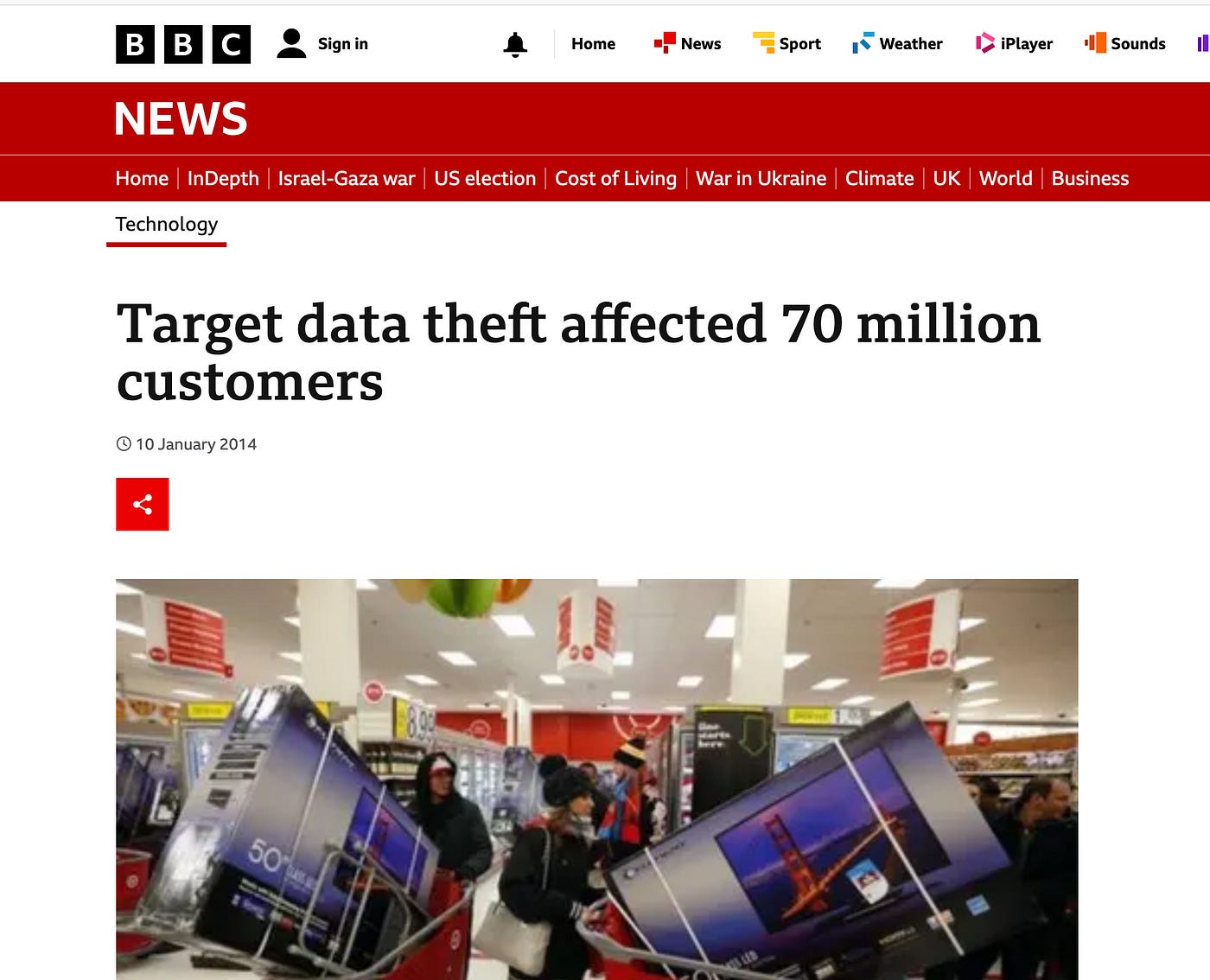
In late 2013, Target, one of the largest retail chains in the U.S., became the victim of one of the most significant data breaches in history, compromising sensitive information, including credit card data, of over 40 million customers.
Additionally, personal information, such as names, addresses, and phone numbers, was leaked for over 70 million customers. The breach not only caused a substantial financial loss for Target — estimated to be over $200 million — but also damaged its reputation.
This case has since become a landmark example in the cybersecurity industry, showcasing how weaknesses in security risk management can lead to catastrophic consequences.
Key Events Leading to the Breach
Phishing Attack on a Vendor: The root cause of the breach was a phishing attack targeted at Fazio Mechanical, a third-party HVAC contractor working with Target. This phishing attack successfully installed malware on Fazio Mechanical’s systems, giving the attackers access to login credentials for Target’s network. Once inside, the attackers were able to move laterally through Target’s network.
Target’s Ignored Security Alerts: After gaining access, the attackers installed malware on Target’s point-of-sale (POS) systems to collect payment card information. Although Target had invested heavily in a security system, including malware detection tools, the system issued multiple alerts, warning Target of suspicious activity. Unfortunately, these warnings were not properly escalated, leading to delays in responding to the breach.
Data Exfiltration: Once the malware was installed on the POS systems, it began extracting and sending customer data to external servers controlled by the attackers. The attackers managed to collect over 40 million credit card numbers in a span of a few weeks before the breach was detected.
Public Disclosure: The breach came to light when security researchers from a bank identified suspicious patterns of credit card fraud linked to transactions made at Target. This led to Target’s public announcement of the breach in December 2013.
Analysis Using CISSP Domain 1 Principles
1. Security Governance and Risk Management Failures:
One of the key takeaways from this breach is Target’s failure to implement an effective risk management framework that incorporated its third-party vendors.
While Target invested in sophisticated security tools, it didn’t take into account the inherent risks posed by its suppliers and third-party service providers.
The breach started with a phishing attack on Fazio Mechanical, a vendor with insufficient cybersecurity defenses.
A robust risk management process should include assessing the security posture of all third parties connected to the organization’s systems.
According to the CISSP Domain 1 principles, organizations must evaluate and manage risks arising from their vendor ecosystems. Target’s oversight here highlights the importance of third-party risk management policies, including regular audits, security requirements, and continuous monitoring of third-party access to critical systems.
2. Inadequate Incident Response Management:
Target had a sophisticated security system in place, including FireEye, which detected the breach as it was happening. However, the organization failed to act on the multiple alerts generated by this system.
This failure can be attributed to weak incident response management processes.
According to the principles of Domain 1, every organization must have an effective incident response plan (IRP) that ensures swift identification, investigation, and containment of security incidents.
Target’s response team did not follow through on the warnings. This gap in their IRP allowed attackers to continue their activities for several weeks. An IRP should include well-documented escalation procedures, responsibilities for incident handling, and continuous monitoring. If Target’s response team had been more proactive, they could have significantly reduced the damage caused by the breach.
3. Risk Assessment and Business Impact Analysis (BIA):
Risk assessments and BIAs are vital components of the risk management process. Target’s failure to perform an adequate risk assessment of their third-party relationships led to their exposure to a serious cybersecurity vulnerability.
Furthermore, a comprehensive BIA could have helped Target understand the potential consequences of a breach in their payment systems.
By failing to assess the risk posed by a third-party contractor and underestimating the impact of such a vulnerability, Target missed an opportunity to prevent or mitigate the breach.
The CISSP principles in Domain 1 emphasize the need for organizations to continuously evaluate and prioritize risks, especially in critical systems like payment processing.
4. Legal, Regulatory, and Compliance Failures:
As a large retail organization, Target was subject to numerous regulatory requirements, including PCI-DSS (Payment Card Industry Data Security Standard) for handling credit card data.
The breach resulted in Target being fined for non-compliance with these standards, as it became clear that they did not fully comply with the necessary security requirements.
PCI-DSS mandates that companies handling payment card data ensure adequate network security, encryption, and regular monitoring of their systems.
In this case, the lack of sufficient monitoring of third-party access and the ineffective response to alerts led to a violation of these standards. Compliance with regulations is a critical component of CISSP Domain 1, and organizations must continuously review their adherence to evolving security standards and legal requirements.
5. Security Awareness and Training:
While Target invested in advanced security technologies, their staff lacked the necessary training to identify and act upon the threats in real-time. For instance, the incident response team did not take immediate action despite receiving multiple alerts from the FireEye system.
This suggests a lack of security awareness and training across the organization.
Security awareness training is a key control in CISSP Domain 1, which helps employees recognize potential security risks and respond appropriately.
Had Target’s employees been trained to follow incident response protocols more rigorously, the breach could have been detected earlier, minimizing its impact.
6. Ethics and Professional Conduct:
A discussion of this breach would be incomplete without touching on the ethical implications. Target initially delayed reporting the breach to the public, a decision that can raise concerns regarding transparency and ethical responsibility.
CISSP Domain 1 emphasizes the importance of ethical behavior in the practice of cybersecurity. Organizations must handle security incidents in a manner that is honest and responsible, ensuring that affected parties are informed in a timely fashion.
Target’s delay in disclosing the breach exposed millions of customers to prolonged risk. Ethical conduct in cybersecurity ensures the protection of stakeholders, builds trust, and reinforces the integrity of the organization.
Lessons Learned
The Target data breach is a quintessential example of how even large, well-funded organizations can be compromised if they fail to effectively manage cybersecurity risks.
Some key lessons that align with CISSP Domain 1 principles include:
Vendor Risk Management: Ensure that third-party vendors adhere to stringent security requirements.
Incident Response: Have a well-defined incident response plan and ensure teams are trained to act on alerts immediately.
Risk Assessment: Continuously assess risks across all aspects of the business, including third-party relationships.
Regulatory Compliance: Ensure full compliance with industry standards and laws.
Security Awareness: Regular training and awareness programs can significantly reduce the chance of oversight.
By applying these principles, organizations can better protect themselves from similar incidents and ensure that they are prepared to respond effectively when threats arise.
Thanks for reading this. This was an excerpt from my new book “CISSP Practice Exams With Real-World Case Studies” which is currently FREE on Kindle.
Check it out HERE