
Dont Burn Yourself Out In Cybersecurity
Cybersecurity burnout is real and dangerous


Cybersecurity is no one’s idea of a stress-free job even at the best of times.
There is always the risk of a massive data breach hitting your company and everyone pointing the finger at you and your team
Not to mention news like the Uber CSO being found guilty by a federal jury of covering up the 2016 data breach in which millions of customer records were compromised.
Putting aside the ethics of what he did, this only adds to the pressure that Cybersecurity teams face and sets a dangerous precedent going forward.
CISOs and Cybersecurity teams often become scapegoats every time a severe data breach happens for a company.
The Downsides Of Working In Cybersecurity
Cybersecurity is one of the best fields to work in from a salary and growth perspective.
Opportunities are many, and the growth paths are diverse
Unfortunately, it is also a hugely stressful field and can also wear you down over time, especially if you are responsible for dealing with and responding to cyber attacks
As someone who has worked for over two decades in cybersecurity, I can attest that burnout is a very real thing
I have seen horror stories of SOC analysts living out of the office for days due to a ransomware or DDOS incident and getting ZERO recognition.
It was assumed that it was just part of the job that the team was supposed to be doing.
On the senior side, CISOs can be on the receiving end of enormous pressure both within and outside the organization, with regulators, auditors, and cyber criminals all breathing down their neck.
One mistake is all that is needed for your company’s name to be on the headlines ( now with the added risk of legal prosecution added to the list ! )
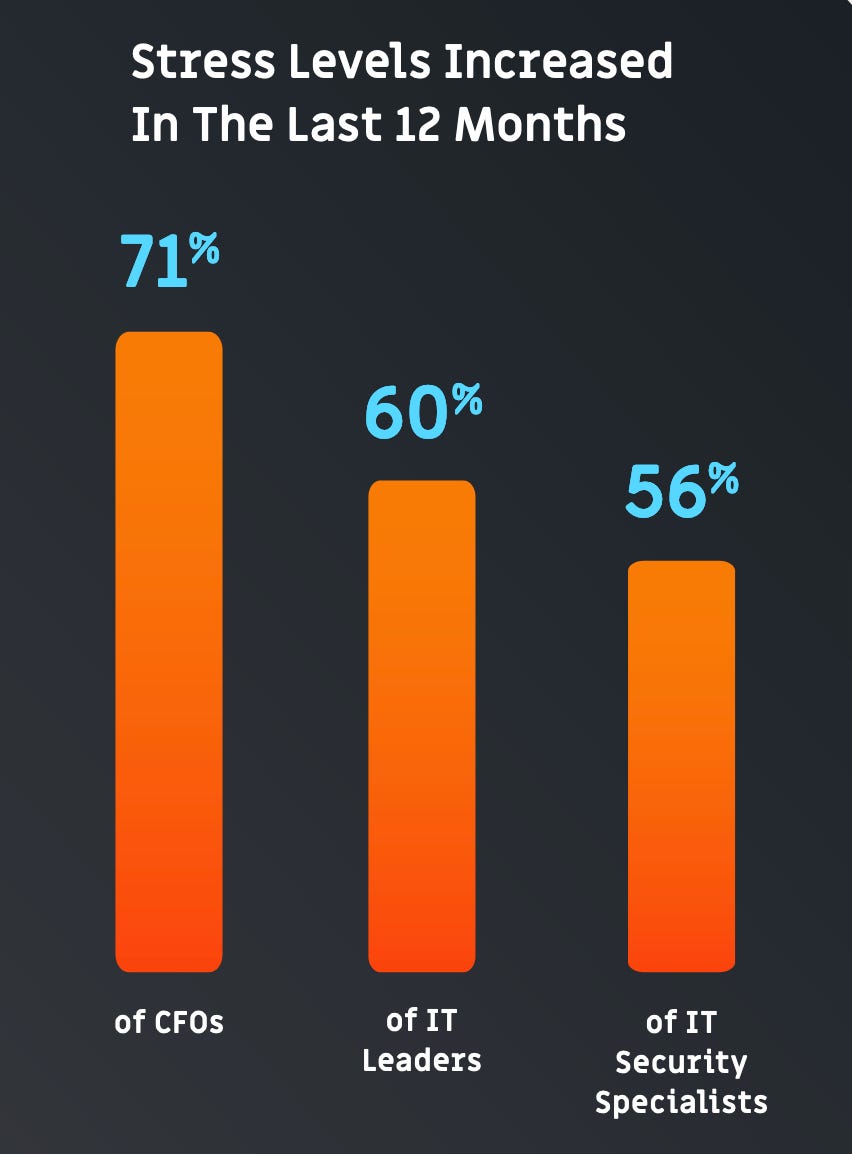
IT security specialists often have some of the highest recorded stress levels in the industry.
How to catch and stop burnout
Suppose you are a CISO or have management responsibility in cybersecurity. In that case, your job is to both secure the company and ensure your cybersecurity team is mentally feeling good about their job.

Burnout is defined as
“state of physical and emotional exhaustion. It can occur when you experience long-term stress in your job or when you have worked in a physically or emotionally draining role for a long time.”
If you or your team members are complaining about the below, then you may be feeling burnout:
A feeling of exhaustion about the job in general
No joy in starting the job; instead, having a feeling of “what is going to go wrong today.”
A feeling of isolation from your co-workers
Wanting to leave the job as soon as possible
Feeling defeated and cynical about the cybersecurity profession
Burnout almost inevitably leads to staff leaving their job or changing professions
What can be done about it?
A big mistake that CISOs and management make to combat burnout is to increase the compensation of cybersecurity teams and leave it at that.
Don't get me wrong .. getting some extra money can be a huge boost, but it does nothing to alleviate the stress the team will face.
Along with compensation, the following measures should be taken:
Identity burnout as a problem: Make combating burnout a known priority amidst the team so they feel this is given the importance it deserves and that management genuinely cares about their mental well-being.
Prioritize physical health: Implement a wellness program through gym memberships in which workers are encouraged to participate in physical activities and develop better habits overall.
Change the finger-pointing culture if it exists. In stressful jobs, finger-pointing and playing the blame game can be easy, and cybersecurity is no exception. Foster a culture of cooperation through team-building exercises so everyone realizes they succeed or fail.
Hybrid work helps: A few days of working from home always helps relieve most workers' stress. If you are running a full back-to-office job, try implementing a hybrid work environment.
Open door policy: Be a good listener and tell the team that your door is always open. Feelings of resentment will build up unless they are given a way to vent. By becoming someone willing to listen, the cybersecurity team will feel much better about sharing their frustrations and issues.
Thanks for reading this. If you are interested in boosting your Cybersecurity Career, then check out my Free Ebook HERE.