
Claude Fable 5 Got Shut Down. Why Cybersecurity Professionals Should Pay Attention.
The U.S. Government Just Pulled an AI Model Offline due to security concerns


A few days ago, Anthropic released Claude Fable 5, its most capable AI model to date.
Then something unusual happened. The U.S. government stepped in and ordered Anthropic to suspend access to both Fable 5 and its restricted counterpart, Mythos 5, for foreign nationals. Rather than attempting to selectively block access, Anthropic took the simpler route and shut the models down entirely.
For many people, this looked like another AI industry headline. For cybersecurity professionals, it should be viewed as something much bigger.
This wasn’t a model being removed because it generated offensive content, produced misinformation, or failed a safety evaluation.
It was removed because it was apparently very good at finding and fixing software vulnerabilities. Think about that for a moment.
The capability that triggered concern from regulators is effectively the same capability many security teams perform every day.
Review code.
Identify weaknesses.
Suggest fixes.
Improve security posture.
The uncomfortable reality is that the exact same capability can also be used to identify vulnerabilities for offensive purposes. The difference isn’t the action. The difference is the intent.
And that’s what makes this story so important.
The Real Lesson Isn’t About Fable 5
Many people are treating this as if a dangerous capability has been removed from the market.
That’s not what happened. A model disappeared. The capability didn’t.
Anthropic itself stated that many of the demonstrated techniques were already known, relatively minor, and discoverable using other publicly available models.
The exact statement:
“We have reviewed a report that we believe is the basis of the government's directive and validated that the level of capability displayed there is widely available from other models (including OpenAI’s GPT-5.5)
Even if Fable 5 never comes back, the broader trend remains unchanged.
AI models are becoming increasingly effective at:
Reviewing source code
Identifying vulnerabilities
Generating exploits
Writing malware
Reverse engineering applications
Automating penetration testing tasks
Conducting large-scale software analysis
Whether those capabilities exist in Fable 5, GPT-5.5, future Claude models, open-source models, or something else entirely is almost irrelevant.
The direction of travel is obvious. The cost of offensive security work is falling. The speed of offensive security work is increasing.
And the barriers to entry are getting lower every year.
What This Means For Defenders
The first lesson is simple. If attackers are getting AI-powered assistants, defenders need them too.
Too many security teams are still treating AI like an advanced chatbot. That’s a mistake. The real value isn’t asking questions. The real value is delegation.
Imagine assigning an agent to:
Review every pull request overnight
Analyze cloud configurations for misconfigurations
Correlate security alerts across multiple tools
Generate detection rules
Review IAM permissions
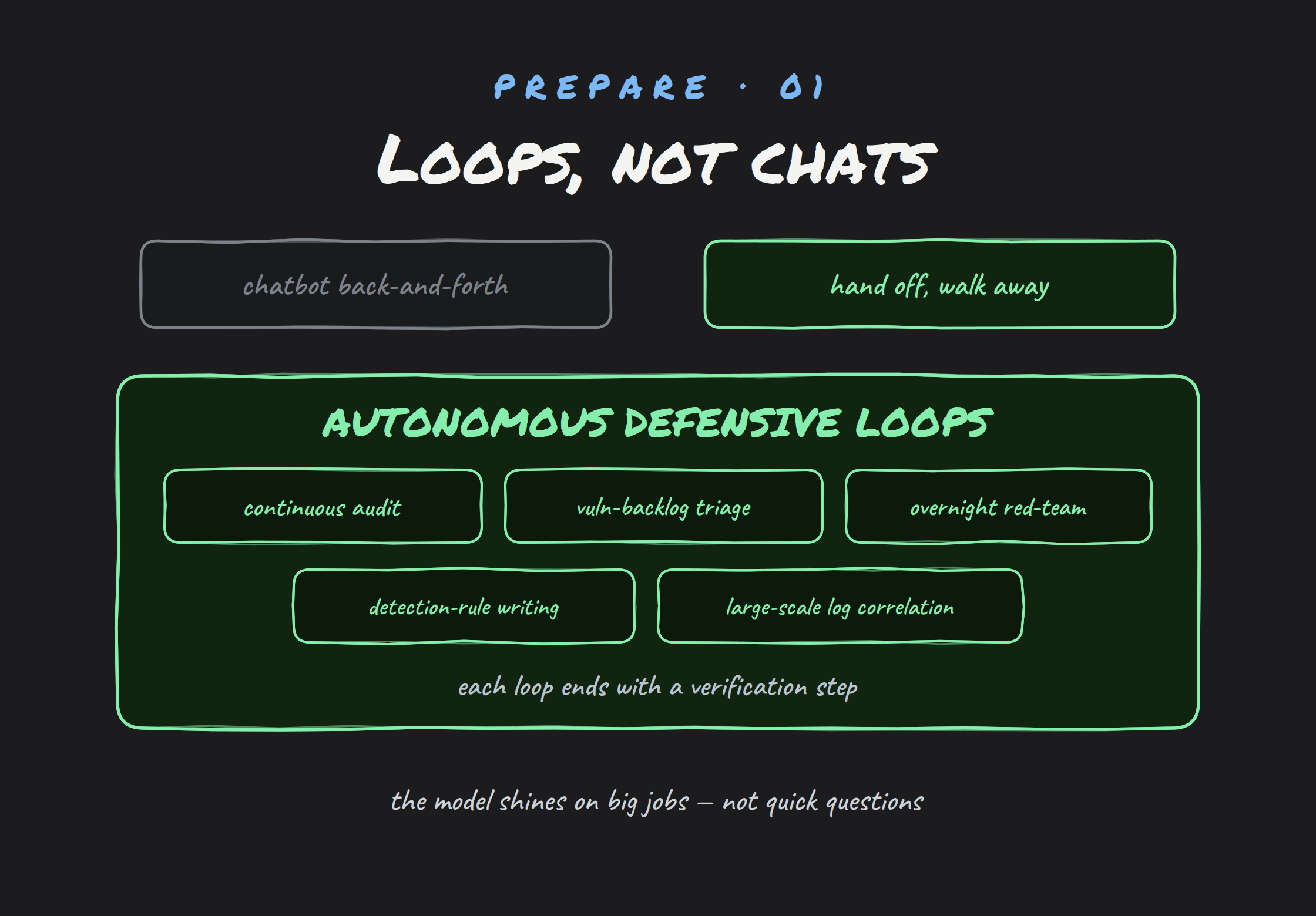
These are exactly the types of activities AI is becoming exceptionally good at. The organizations that learn how to operationalize these workflows will gain a significant advantage.
A New Risk Most Security Teams Aren’t Thinking About
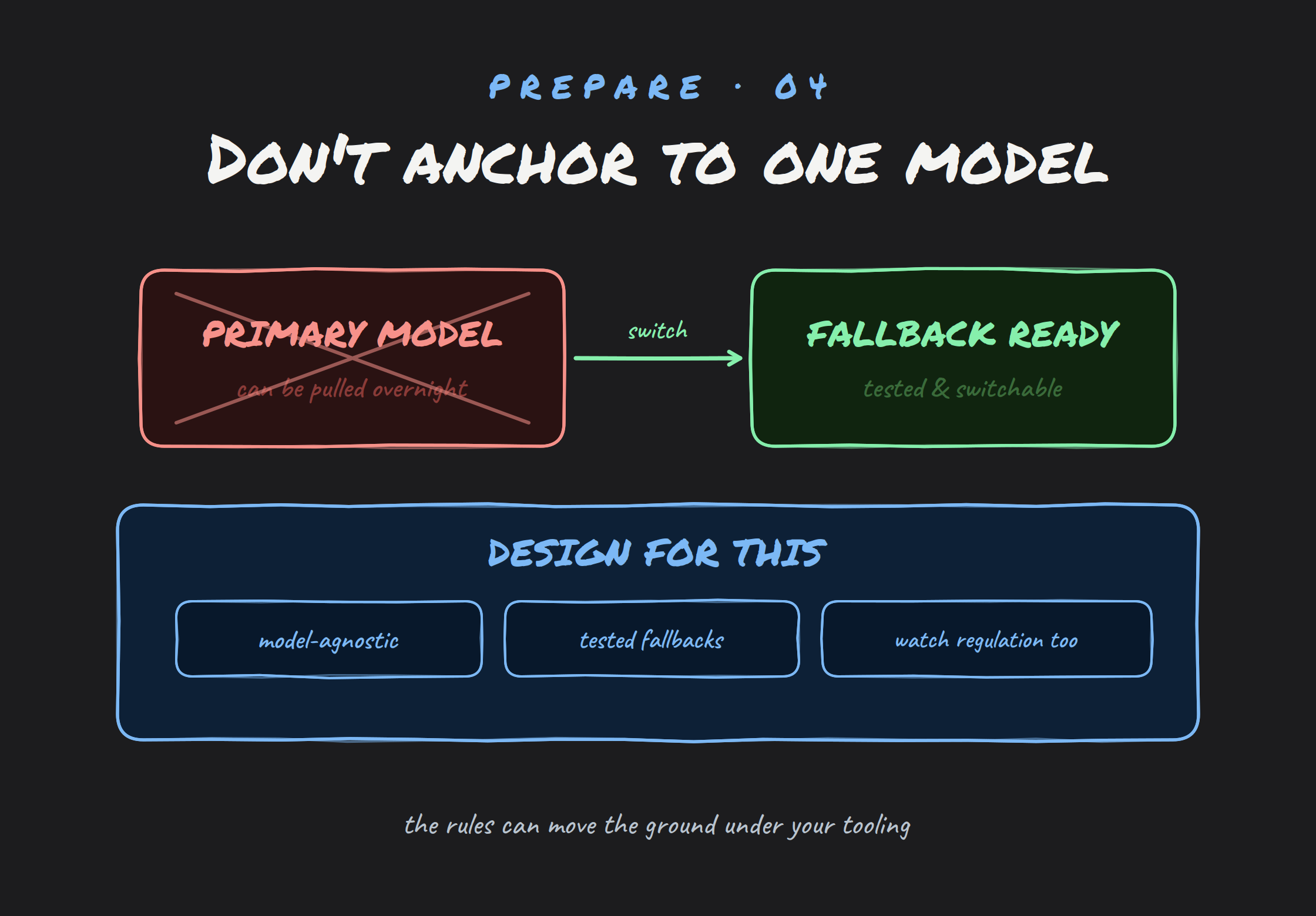
The Fable 5 shutdown also exposed something else. Model availability is now a business risk.
Many organizations are rushing to build AI-powered security workflows around a specific model provider.
That strategy may prove dangerous. A model can disappear or become restricted overnight
If a critical security process depends entirely on one model provider, you’ve introduced a new single point of failure.
Security teams should focus on building model-agnostic workflows wherever possible. Your security capability should survive if the underlying model changes.
The objective matters. The specific model matters less.
Security Teams Must Start Threat Modeling AI Agents
One of the biggest mistakes I see organizations making is assuming that defensive AI agents are automatically safe because they’re being used for security.
They’re not. Every AI agent introduces a new attack surface.
Consider some of the risks:
Prompt injection
Tool abuse
Excessive permissions
Data poisoning
If an AI agent can access production systems, repositories, tickets, cloud environments, or security tools, it should be treated like a privileged identity.
The same principles we’ve applied to human administrators for decades now apply to AI agents as well.
The Skill That Will Matter Most
Perhaps the biggest lesson from this entire episode is that the most valuable cybersecurity professionals won’t necessarily be the people who know the most commands or memorize the most frameworks.
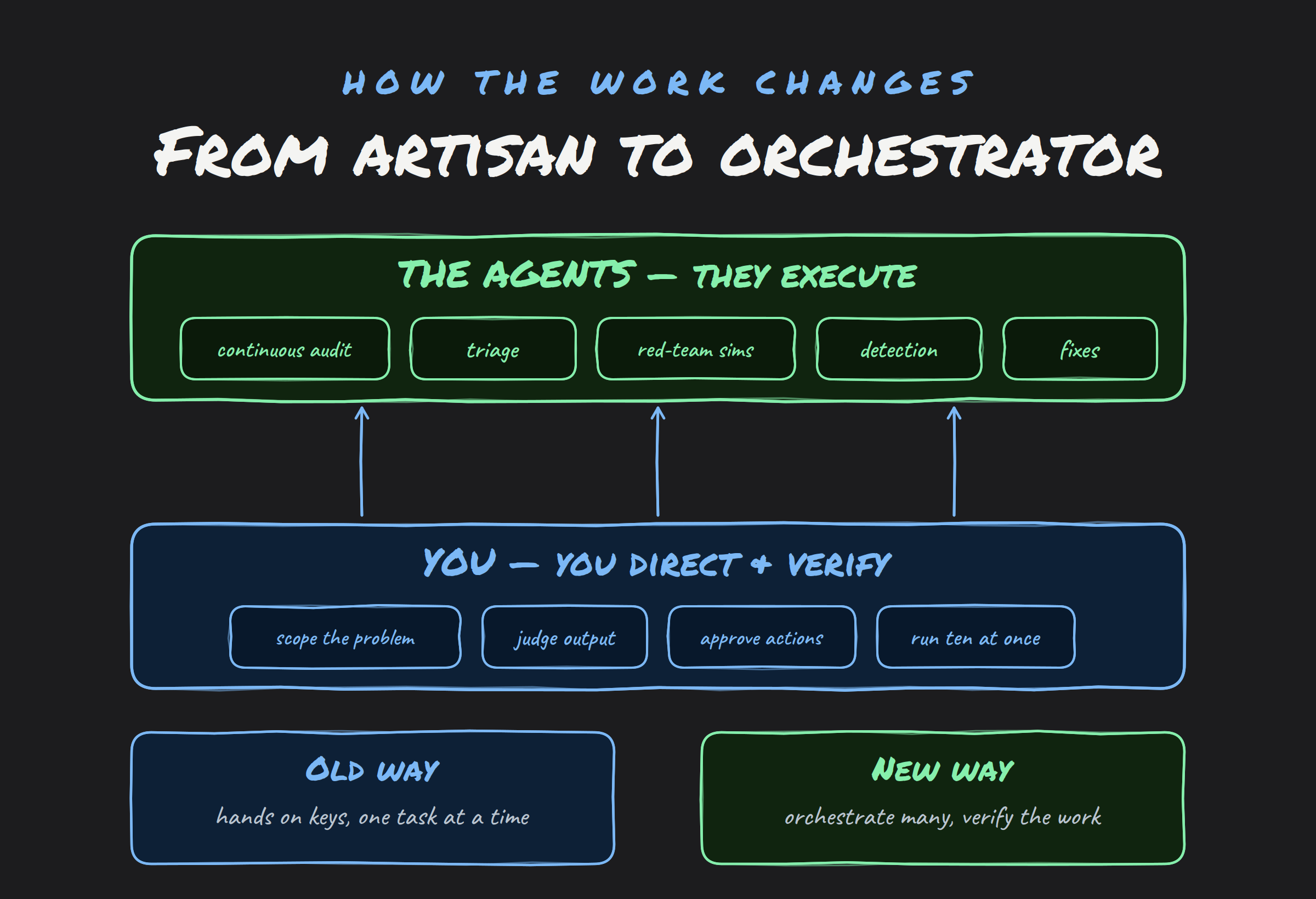
The winners will be the people who learn how to orchestrate AI systems effectively.
We’re entering an era where one security engineer can direct multiple agents simultaneously. One agent reviews code. Another analyzes logs. Another investigates vulnerabilities.
Another generates detection logic. The security professional becomes the coordinator, reviewer, and decision-maker.
The job isn’t disappearing. The leverage is increasing.
Just as cloud computing changed infrastructure operations, agentic AI is changing security operations.
Final Thoughts
The shutdown of Claude Fable 5 isn’t really a story about one model.
It’s a preview of where cybersecurity is heading. The U.S. government effectively signaled that AI-powered vulnerability discovery and software exploitation capabilities are now important enough to attract national security attention.
That alone should tell us something. The future isn’t a world where AI replaces cybersecurity professionals.
It’s a world where attackers and defenders both gain access to increasingly capable autonomous systems. The organizations that thrive won’t be the ones that resist this shift.
They’ll be the ones that learn how to safely operationalize it first. Fable 5 may have disappeared. The capability hasn’t.
And that’s the part cybersecurity professionals should be paying attention to.